The Everybike

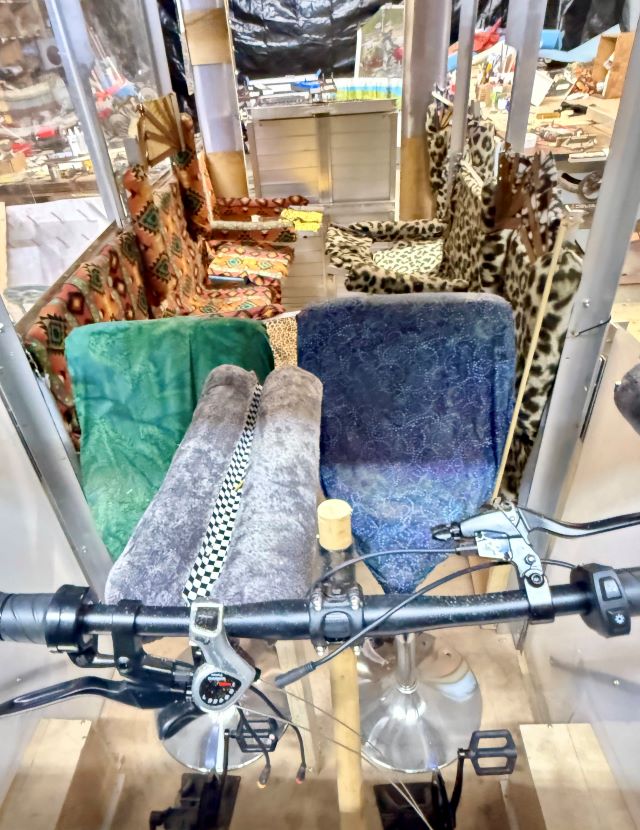
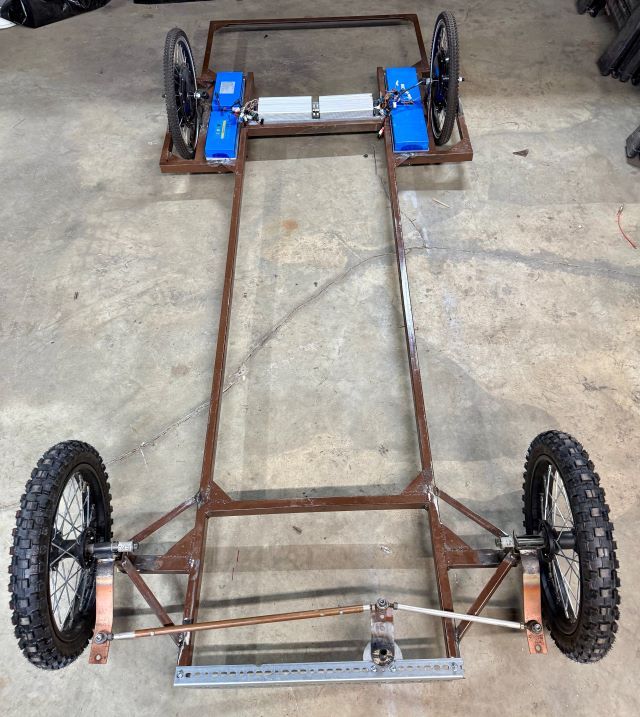
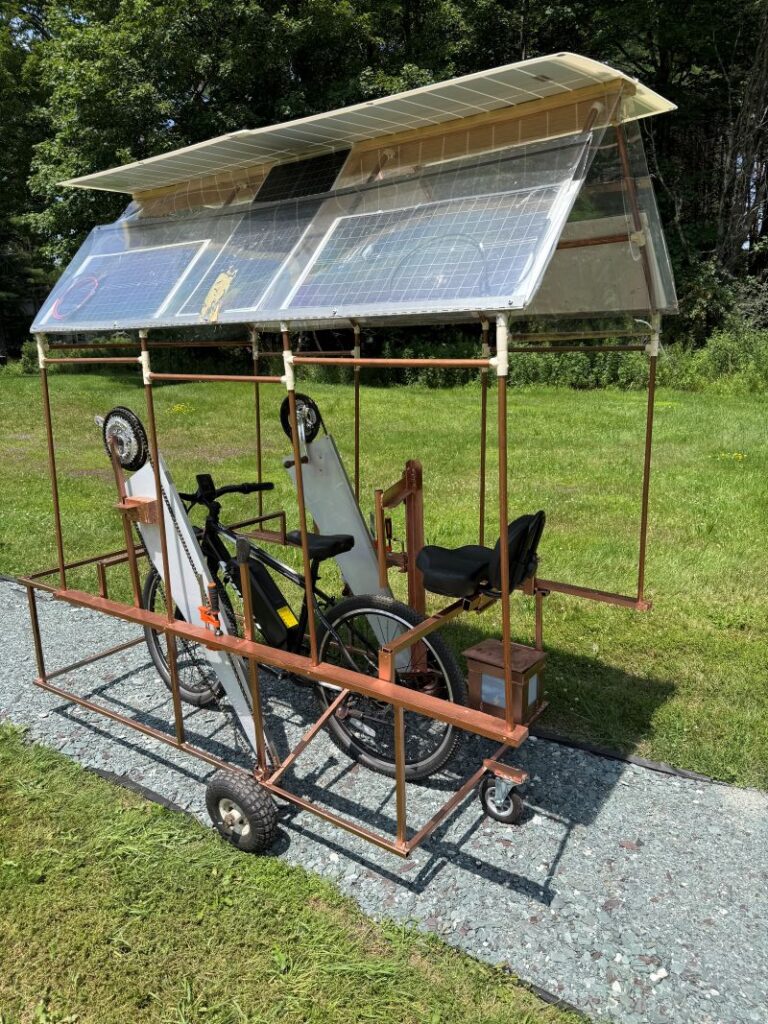
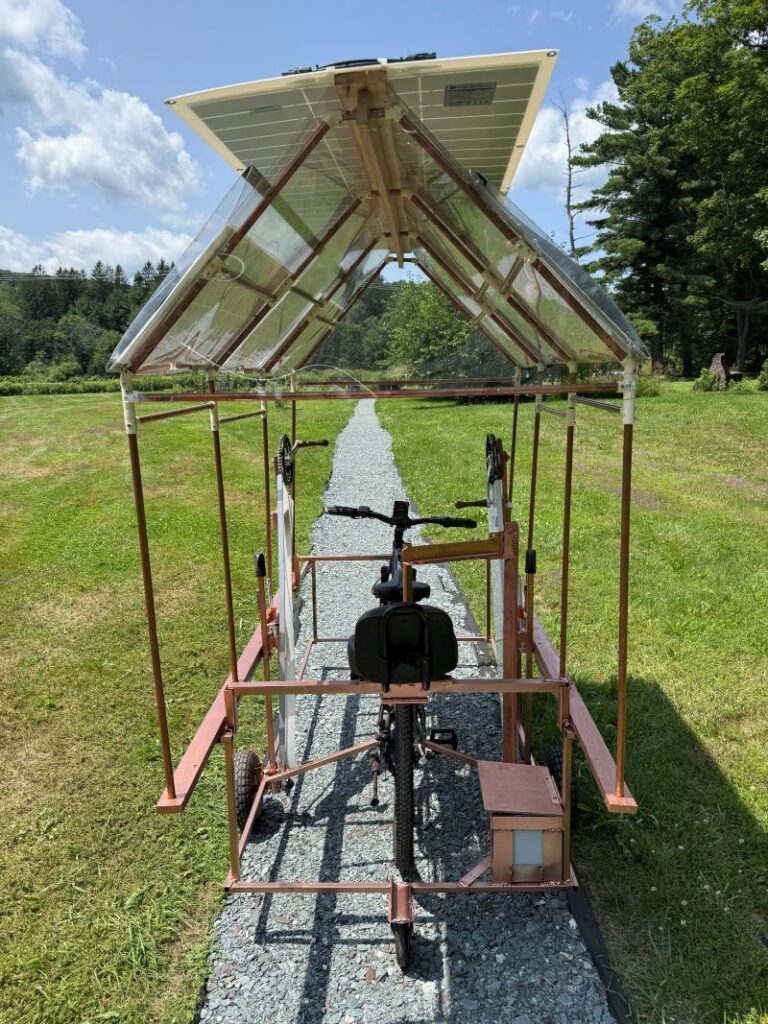
An electric bike has outrigger wheels for stability,

foldable, removable, weather cover with solar panels, hand cranks for extra power and upper-body exercise, can sit or stand in a yoke while pedaling, with space for a passenger. Still being perfected.

The Family

A 7-passenger human/solar electric-powered vehicle.

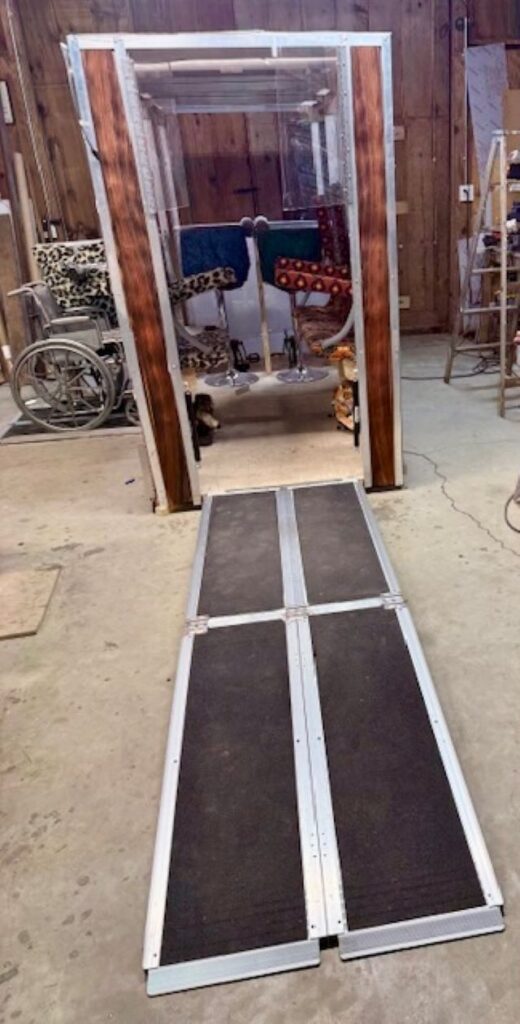
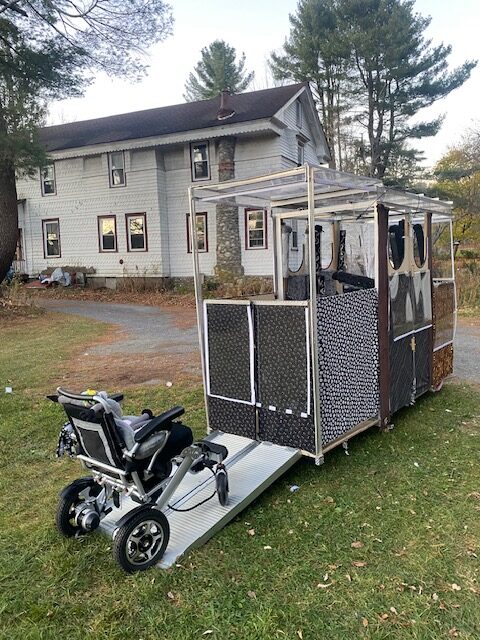
4’x10′. NYC legal pedicab. Wheelchair accessible.

Pedicabs are finally being considered a subject worth discussing.

The Half

A hybrid Human/Solar/Battery/Electric-Powered

Introduction:

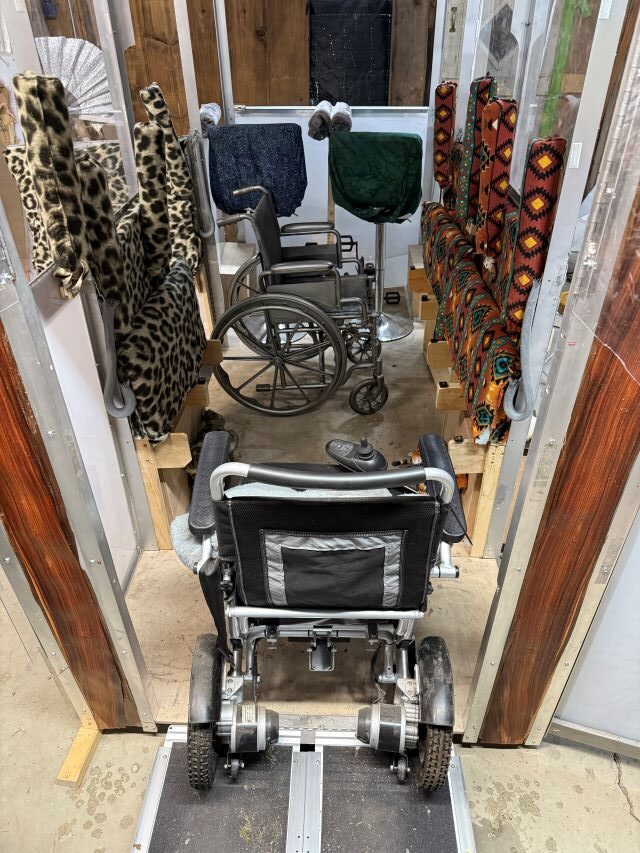
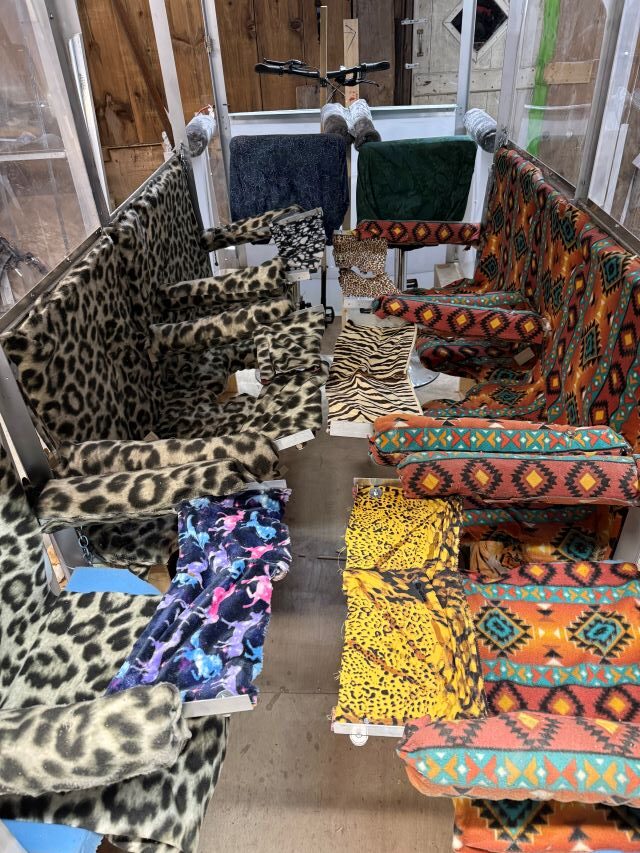
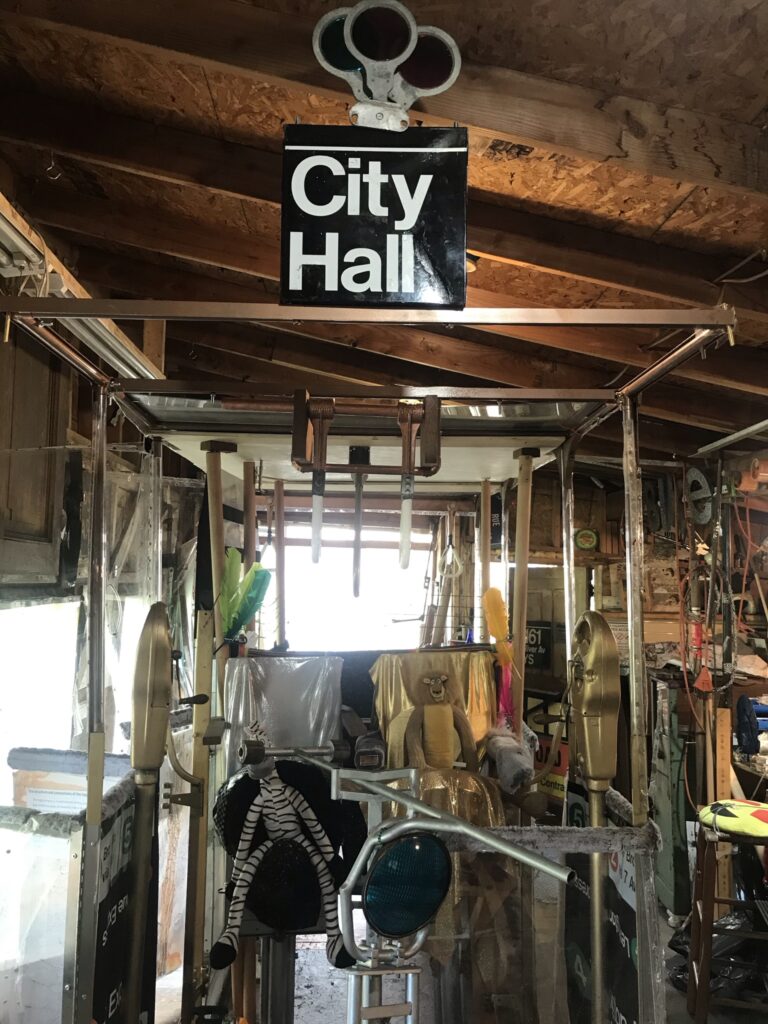
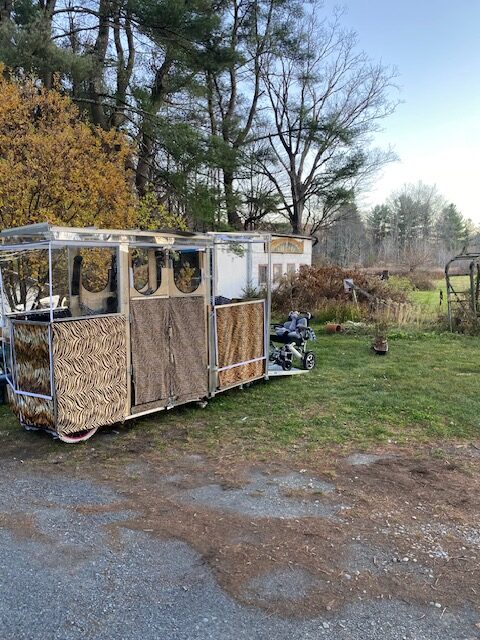
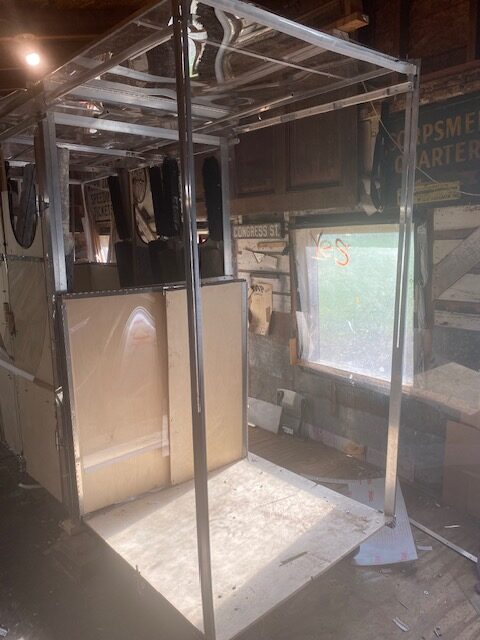
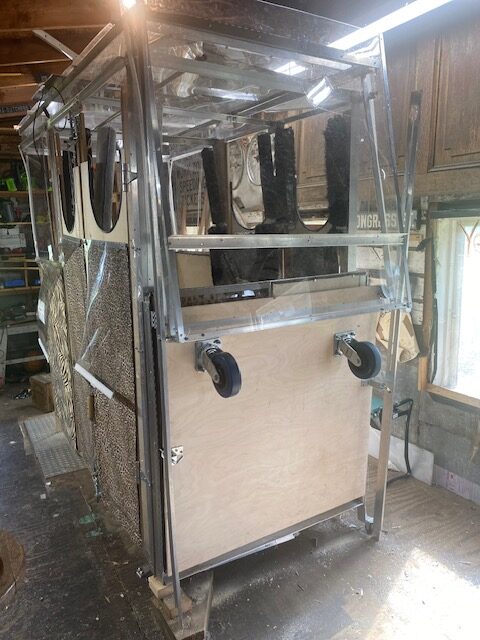
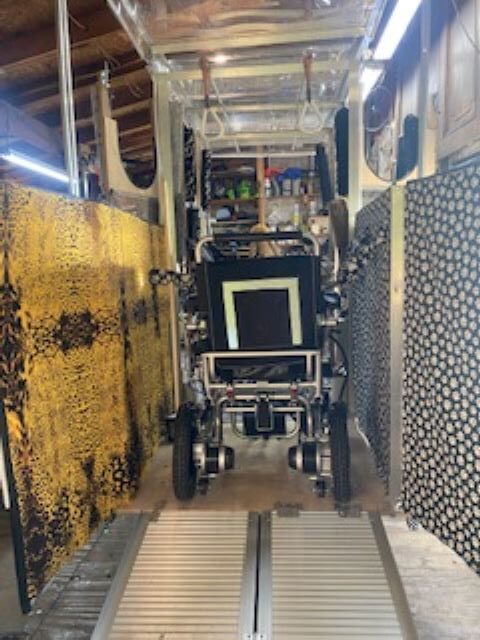
NYC-legal pedicab (and potential cargo-carrying) vehicle. Ten feet long, four feet wide, and six feet tall. It can be partially or completely open to the weather or totally enclosed. Its low platform permits it to be both an ADA-legal wheelchair and a hand truck accessible, by a ramp, which can serve either sidewalk or the street. There are two potential pedalers and room for six or more additional passengers. The shell is made of clear, weather-protecting, polycarbonate. There are 500 watts of solar panels on the roof. The comfort and safety of passengers are paramount. It can transform into a stationary source of local news at intervals.

I was one of the two founders, over 25 years ago, of this industry in NYC. Unfortunately, rather than an important, new form of transportation, pedicabs have come to exist, virtually entirely, as an expensive way to experience Central Park. The potential of this activity to provide the public with a needed new means of getting around the city, with huge environmental benefits and positive effects on healthfulness, was lost when the taxi industry successfully lobbied to limit their impact on their industry. Many regulations need to be brought up to date. For instance, If they were to be permitted to be just a few feet longer than the current 10’, they could accommodate as many as two handfuls of people and ply regular routes, at a modest pace, as a supplement to the current options. They could be made unique, by artists and craftspeople from right in the City and its environs, even supplemented by creative efforts from around the country and the world. (Please take a look at the World’s Fair page that is adjacent to this one, as one possible way to further this idea.)

The very substantial, independent, and valuable employment created here can be in the form of individual entrepreneurs, establishing their presences, within geographically-defined communities, through their regular routes. This could be seen as a version of the traditional sidewalk newsstand, a conspicuous local statement about being a worker in, and therefore as a citizen of, a defined community. By becoming, perhaps the most knowledgeable person, about all of the business events and activities along their route, through the simultaneous posting of the very real and also virtual advertising, of real estate, employment, eating and entertainment and services, from legal to physical therapy, serious income, and status too, can be earned. Eventually, transport could be free (with tips allowed of course) if other income opportunities prove sufficient.

I call this design the Half because the rest of the story is still out there. It may be perfect in some ways to me, but it is not meant to supplant everything there and become the new standard. I hope it serves to do the opposite, a means to demonstrate the possibility of a wide range of the most different and exciting additions to the streetscape, while at the same time expanding fully accessible transportation options and helping to develop a quieter, cleaner, and more beautiful city.

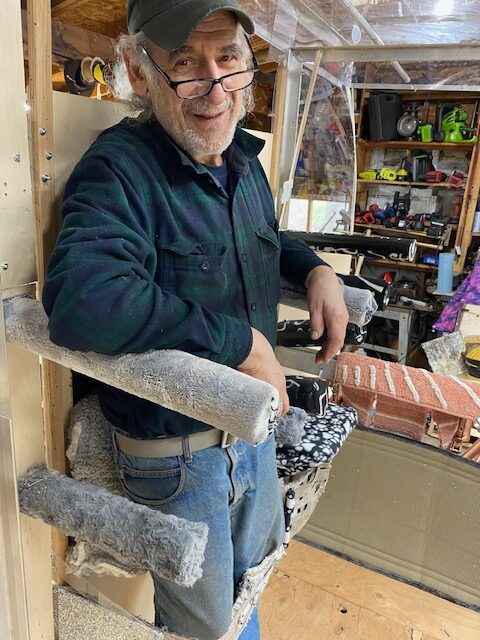
In order to conserve space, and thus maximize capacity, users will be provided with a device that helps them be comfortable in a somewhat standing position, supported in a number of different ways. While sitting can seem perfect, part of the reason for this is our natural proclivity to relax but also we do it to go along with prevailing norms. We are compelled, from the youngest age, to accommodate ourselves to seated positions, at church, school, and the dinner table. Certainly, there are times when this is ideal, but we are bipedal creatures, and while we don’t climb trees much, we walk and run and stand around talking like this is our most natural posture. If we can be erect, with some modest support offered to our glutei maximi, an enhanced perspective, and other advantages can chime in, along with the health benefits.

Straight ahead, all aboard, with a solar roof and fully accessible.
3 The other driver who is guiding the vehicle, steering, and braking.
6′, ADA-correct wheelchair/cargo ramp, and eventually publication cabinet.
Hand cranks feed energy into the battery, by passengers too eventually.

The Sociable

A Trike. 3’ x 6’ x 6’ tall.

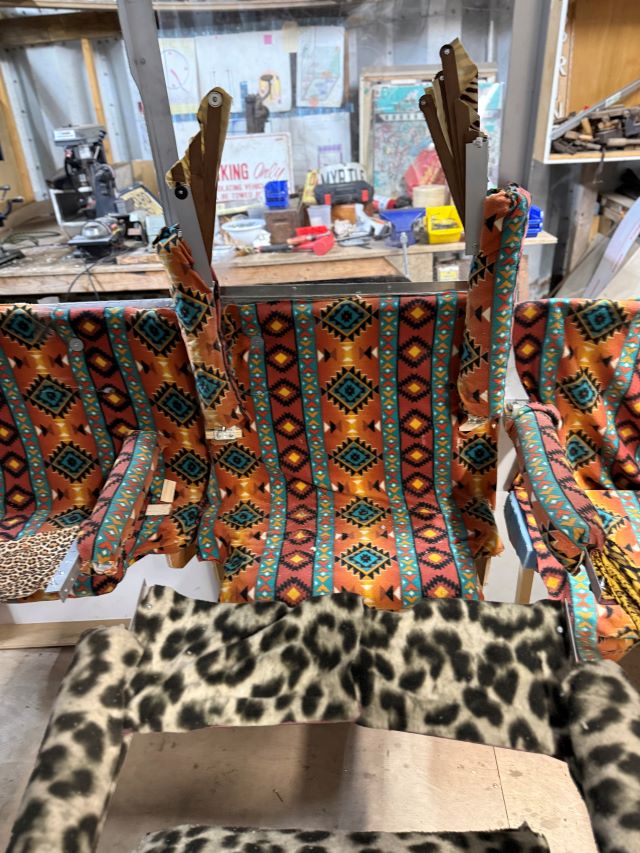
It can be wide open to the air or fully enclosed in a folding polycarbonate shell. It may carry one, two, or three people. One drive wheel is an anchored-in-place, pedal-able unicycle, the two others are hub-motor equipped, electric-powered wheels. The vehicle can travel, facing either the three or the six-foot side, either tandem-style or the more sociable side-by-side. The seats, and wheels, all pivot and move, easily, to enable this to happen. Use in dense urban spaces is what is expected here, and at a maximum speed of 15-20 mph to ensure safe operation.

The wheels are all linked together so that when facing the six-foot side, with the pedaler steering, all the wheels turn together. When facing the 3’ side, the pedaler steers and the back wheels go straight, as in all trikes. Batteries are stored under the vehicle, which can be charged in place or slide out like a drawer and be rapidly replaced. A solar panel acts as a roof as well as a source of power. When an opening above is preferred it can be temporarily stored, with the rest of the body, alongside the wall. The hinges are aluminum, covered by colorful fabric. Closings are Velcro and magnets. Seats are well cushioned and sprung, mounted on tubes that are anchored to the floor. They can be adjusted for height and face any direction, as well as be tilted, to allow for the most comfortable, supported, standing/leaning posture, or made level. Drive wheels are under polycarbonate covers, both for passenger safety and comfort and to maximize weatherization when enclosed. These structures are part of the wheels’ “forks”, turn with them and help stabilize them.

Current regulations in New York State demand that electric bikes and trikes be no wider than 36”, thus this design. Careful study suggests a limit of 48” wide, or even up to 72”, with a corresponding stretching of the length to 8’ or so, will eventually be regarded, in crowded cities, as optimal for many purposes. For example, this would permit wheelchairs to be transported properly on such a vehicle, or several passengers or a healthy load of cargo to be accommodated safely and comfortably. The OH is meant to test the absolute minimum of space and materials that must be required to begin to accomplish these tasks. There are considerable benefits to exploring this, with the lowest level of consumption and simplicity of design, as one answer that offers a wide variety of rewards. It is not necessary to consider this as the only or best answer to this challenge, but it is, rather, a suggested first step in the right direction.

There is a 3/4” plywood floor, to which are attached aluminum poles, and steel angles. Poles anchor additional aluminum tubes, keeping seats and wheels in their proper places. Has appropriate lights, mirrors, and all other necessary equipment. The polycarbonate cover can be deployed partly, as desired, and the entire shell folds flat and can be stored alongside the back, This can be used as a personal vehicle, or for carrying passengers or cargo, as it is, without major modification. A full-scale working prototype is under construction.

The Cat

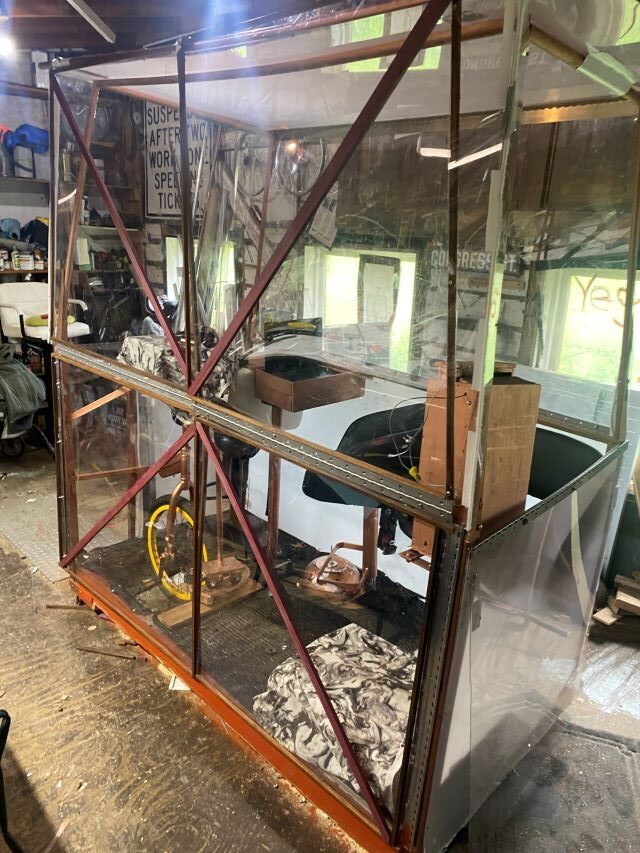
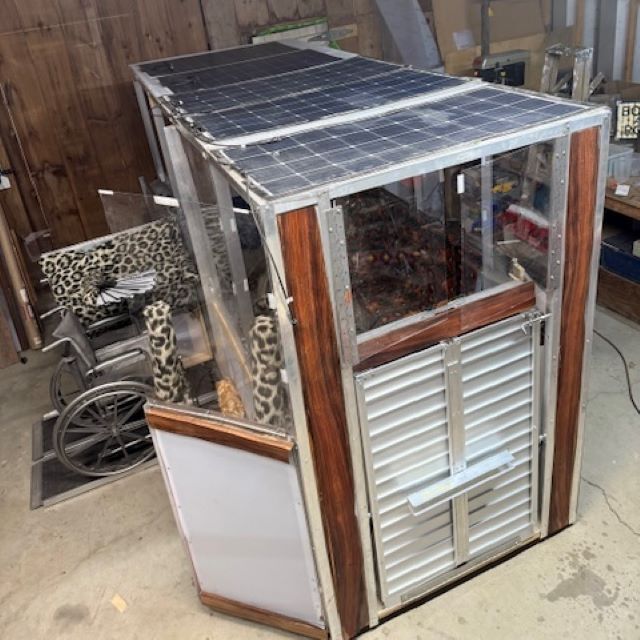
The CAT is a prototype we developed showcasing innovative ways to reconfigure and reimagine pedicabs to maximize their potential. Designed to inspire, The CAT offers a glimpse into how local creators can adapt pedicabs to meet specific community needs. The project encourages a rethinking of human-powered vehicles, highlighting their adaptability, low environmental impact, and potential for positive social impact.

The CAT project exemplifies the kinds of innovative solutions we hope to see from people around the world, each addressing unique transportation and sustainability challenges in their communities. It is an example of what’s possible through collaboration, creativity, and sustainable design.

This prototype vehicle

was constructed in order to demonstrate some of the ways in which “Pedicabs” can be re-configured, maybe even re-conceptualized, in order to make full use their potential. They are now operating in many other urban spaces, in countries across the world. In some, they are already being converted to electric operation en masse, by law, in order to help improve the breathable air. Attention to their siblings, cargo and delivery cycles, is expanding exponentially, with next hour/same day/next day service the rule now. It is time to think about this subject seriously, rather than dismissing it as a bit of strange overpriced, nostalgia.

The CAT is:

Only 40” wide, (it might like to be 48” to better accommodate side-loading wheelchairs), The city permits pedicabs to be 55” wide

Seven feet long, with an additional 40” for the foldable extension, which can provide for a second wheelchair or cargo use

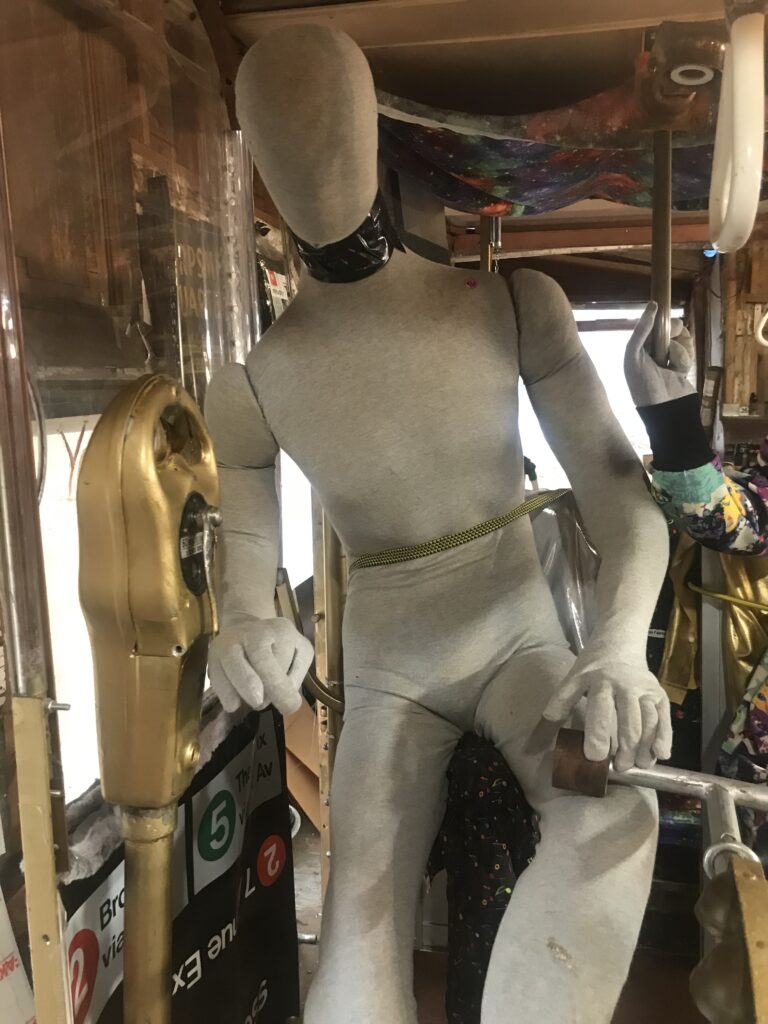
Seven feet tall, in order to enable a 6’+ tall person to stand inside comfortably and provide some space for ancillary equipment

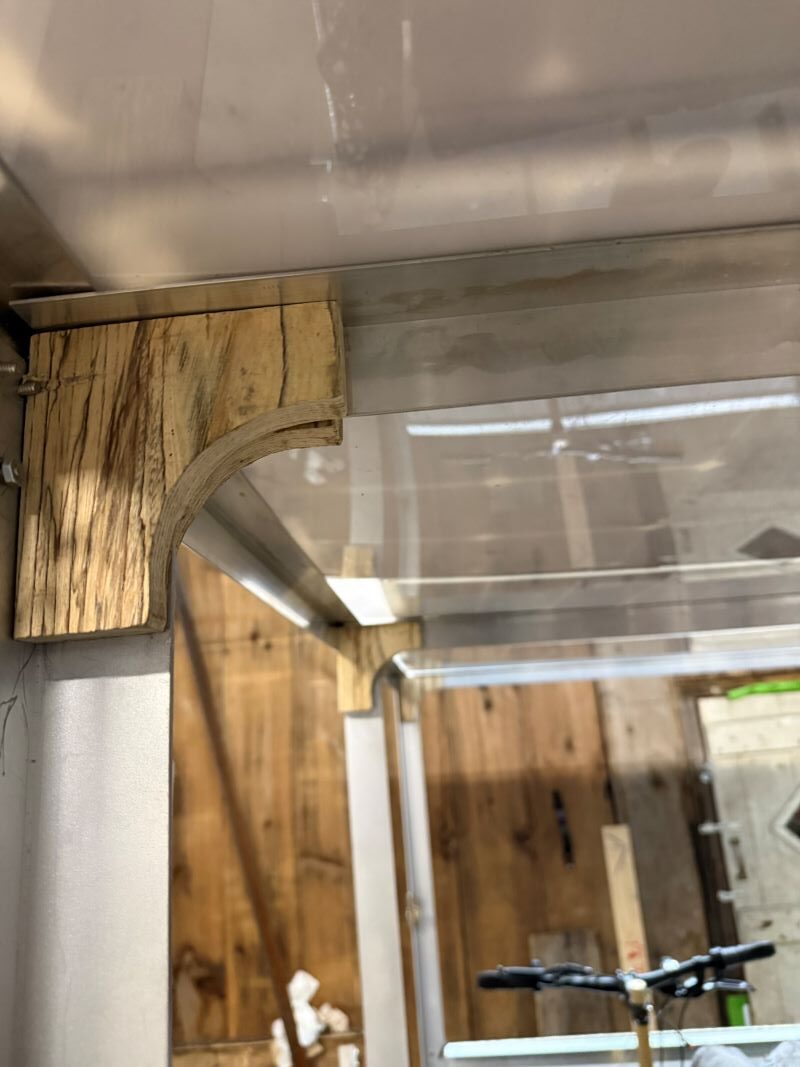
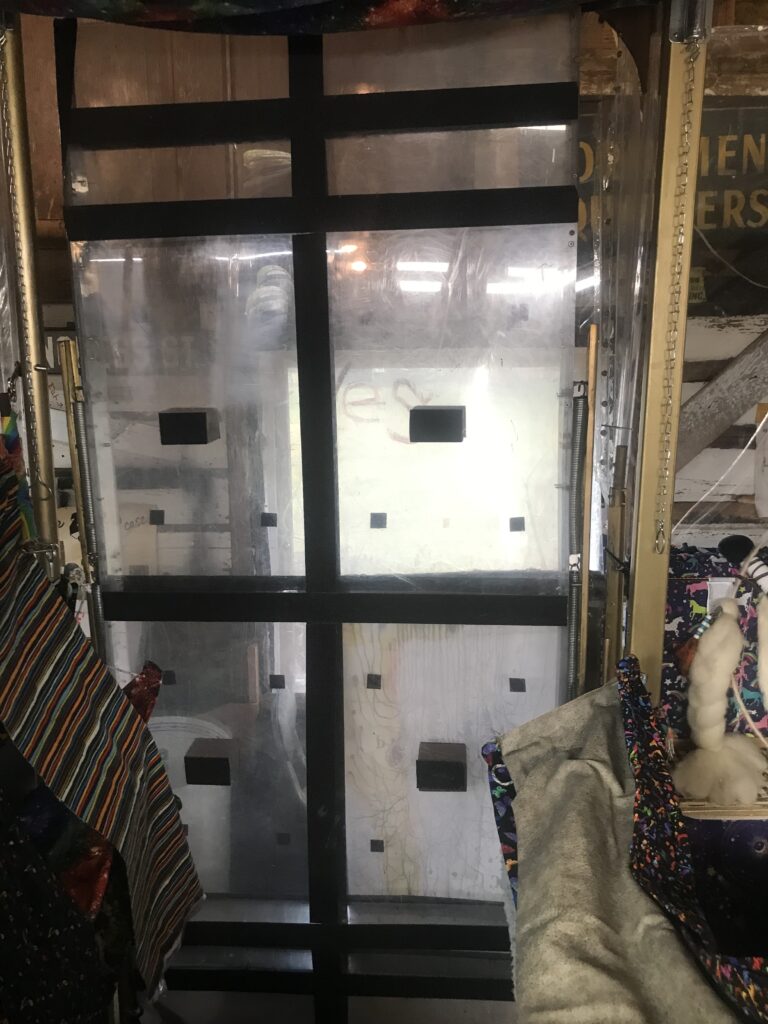
Depending on weather, is surrounded by clear polycarbonate windows, that can be folded away when not in use.

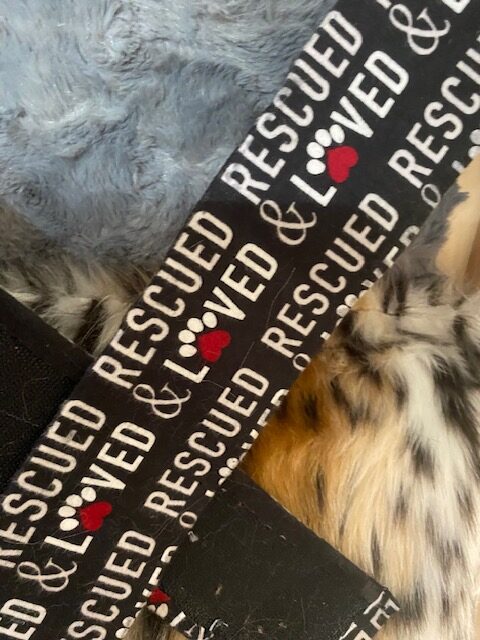
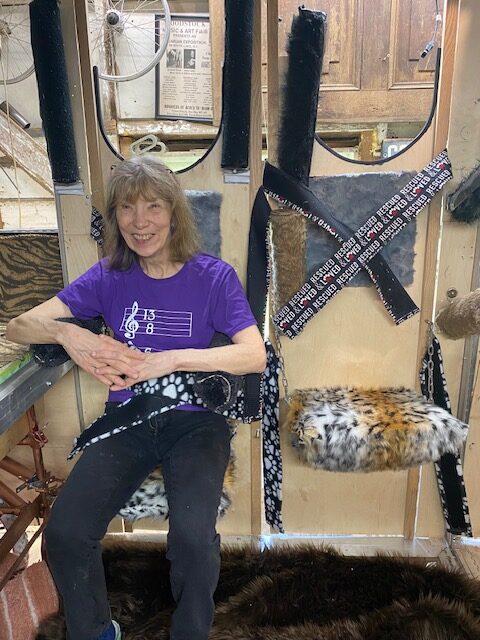
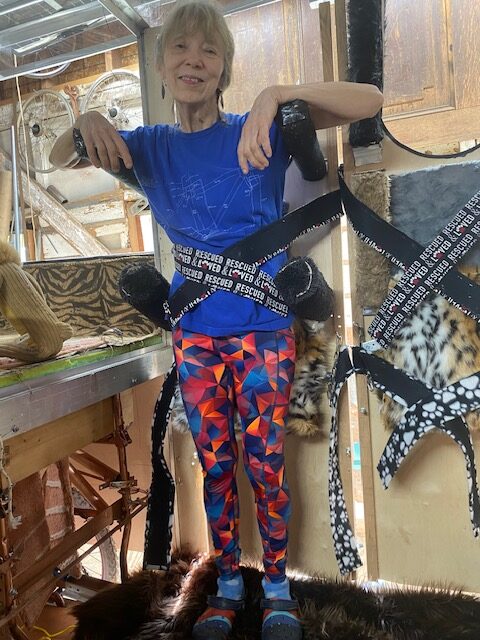
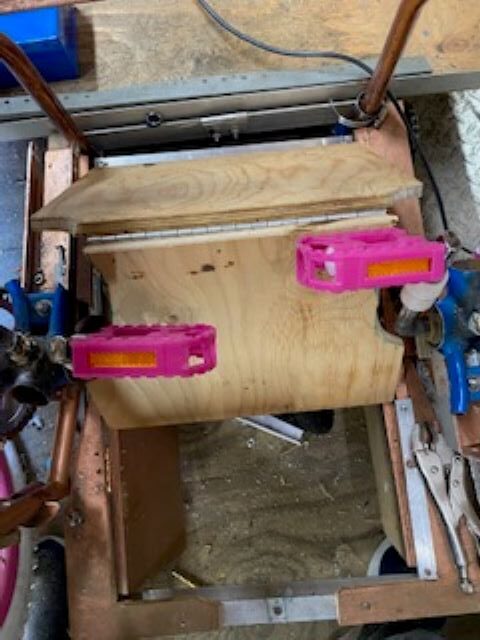
In order to maximize capacity, conserve space and provide for different postures, standing/leaning is possible and safe with restraints

It is steered with a tiller, and pedals provide some power, as well as controlling the speed, which maxes out at 15 MPH.

The roof is covered with solar panels, that can produce up to a third of the energy needed to move the vehicle during the day

The underside of the vehicle contains spaces for a number of re-chargeable batteries which can be charged in place or changed out

There will be a variety of services offered, Wi-Fi, device charging, telephone connecting, some now, some later

Operators of vehicles need to be very familiar with their territory and can profit substantially by providing job, space, and other help

Ideally there can be regular routes for vehicles, with ties to all local merchants and cultural and educational resources

Can serve on-call customer rides, wheelchairs, neighborhood and many other tours, cargo and freight, group rides

Wheelchairs can load from either side, the sidewalk, or from the back with a movable ramp to serve all openings

There needs to be room for up to 8 passengers in such a conveyance because sometimes there is that much need to fulfill

It’s called the CAT, because felines are some of the most interesting, engaging, loving, ferocious, and ubiquitous fellow mammals

Also beautiful, puzzling, graceful, proud, individual, soft, as hard to understand as they are to dismiss, not unlike us, planet-mates

Leaping and pouncing, curling up and stretching out, demanding and self-possessed, mysterious and predictable, like us.

Passengers may ride sitting
Passengers may ride standing
Can be used for cargo
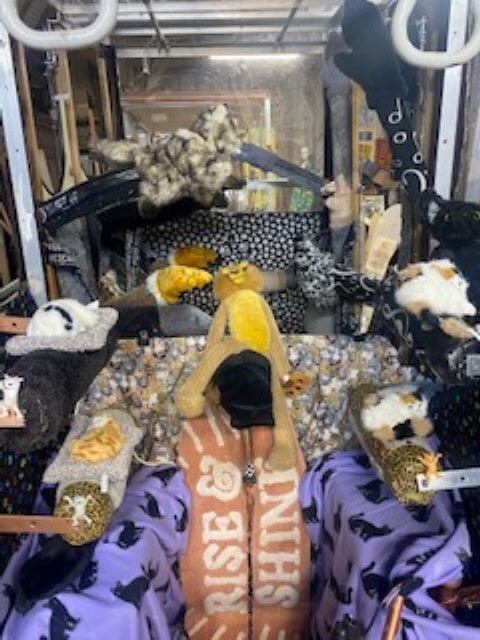
Rise and shine

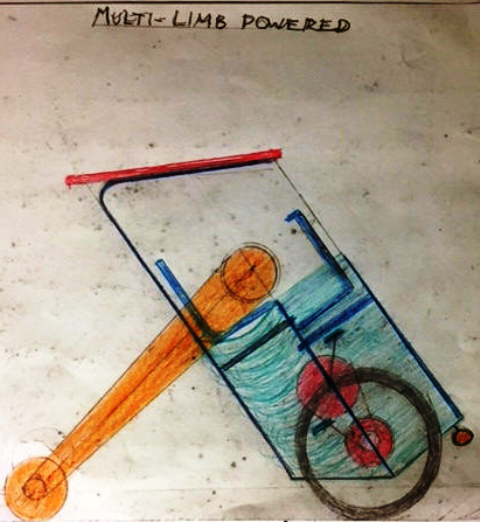
Multi-limb-propelled

Multi-posture Weatherized Trike

Multi-limb powered
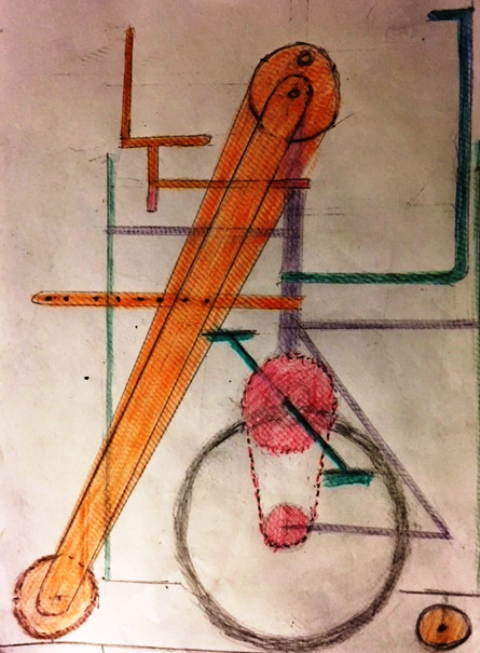
Multi-limb powered
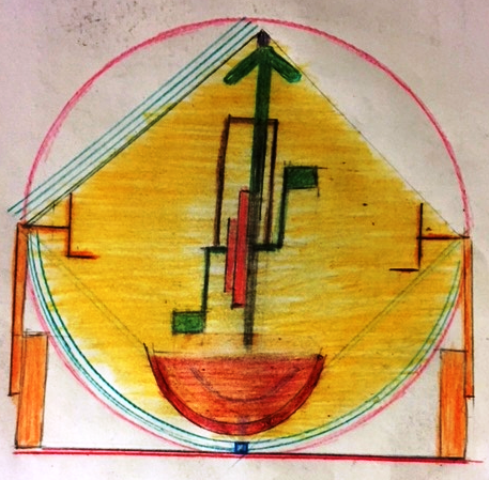
Multi-limb powered

One version allows the rider to determine his posture when moving, from standing straight up to sitting or leaning or even practically lying down. Since maximum visibility is needed to provide safety, conspicuous extensions are deployed above the vehicles, aided by LEDs, to make certain that trucks, vans, buses, and cars are able to be aware of their presence at all times.

Contacts

For more specific inquiries or detailed assistance, please reach out to us by phone or email:

Steven Stollman:

Tel.: 212 431 0600

Email: stevenstollman@gmail.com

The images used in the website links are samples of possible development and they are not the official part of this undertaking.

The Task

There are some bikes everywhere now.

What is not there, are fully weather protected, stable and comfortable, up-to-date trikes. If vehicles are light enough, human power is relevant, and by using solar/electric assistance, travel can be pleasurable and healthful too. Until all of the relevant technologies evolved to this point, motors, batteries, controllers, etc., this advance was impossible. We have the tools now, to bring our bloated urban transportation systems, down to the Human Scale, to take a giant leap into a survivable future, and a much more beautiful and visually arresting place.

Most public spaces around the world have, historically, been monopolized by dangerous, oversized vehicles. The relevance of minimal transporters is now being acknowledged by City governments everywhere, and most of the public too. Whereas cars are too big, it is also true that hoverboards and scooters, even bikes, may be too small. They are all used, almost exclusively, only in fair weather. This is understandable, since cold can be magnified when you are moving, and rain is not much fun, and it makes pavements slippery and radically lowers visibility for drivers in dangerous, nearby cars. If every place were Copenhagen or Amsterdam this would matter less. Here and elsewhere, we have accustomed ourselves to a very high level of physical comfort though. We need vehicles that can be enclosed when necessary, and open when not, evolved designs that allow for group riding instead of just solitary, and as much artistry, creativity, and ingenuity put into these protective vessels as humanly possible.

Just as important as making it, is making it to last. There is a challenge, to make these things so they can well withstand the wear and tear of riding on rough roads, and that multi-person use of something is going to inevitably entail. There was a time when it was understood, that you made something to last as long as possible. Following that we had “planned obsolescence”, and trivial design changes to remain the “latest”. Now we need to go back to the original idea. Trolley cars lasted decades, even as they were updated and improved. Durability, especially when you are being punished by imperfect conditions, is crucial. It will also matter to have facilities that are able to provide repairs and improvements to a growing industry.

Safety matters greatly. Nobody should be expected to be harmed by the use of your product. Smooth loading and unloading of passengers must be assured. While in transit, users must be provided with comfort and ways of securing themselves to maximize their pleasure in this passage. No sacrifices are being asked for here. The point is to raise quality, access, and affordability, all at the same time by bringing things down to our “Human Scale”.

The street is also a theater. Sidewalks are full of audience members, and customers as well. Those operating these vehicles are putting on a show in which they are the star. The object is a stage and also a prop, a costume, and a statement. It cries out for lights and bright colors, to be as fantastic as it is practical. If it has been hired for a child’s birthday party it might assume one shape, if they’re for a wedding, something else. Have a Winter guise and a Tropical, a somber mien and a celebratory one.

An organization is being formed, which is intended to act as an expeditor, to instigate this activity everywhere, and help to expand the influence of this work. This effort is intended, partly, to ratify the good sense of using a kind of International Cooperative, as a model for taking action on urgent matters such as Extreme Weather. It is a way of exploring the energy that can be generated, by identifying one another, according to our interest in, and participation in, a relevant aspect of our common lives. This can be done by breaking down geographic and other nominal and irrelevant barriers to a peaceful, well-fed, and dignified population, able to move about freely and fully acknowledge each others’ humanity.

Along with agriculture, transportation has been scaled up, such that the consequences of the few players’ policies, are invisible to these immensities. Economies of scale can benefit us sometimes, but can also give all of the discretion to the largest factors, who will do anything to secure their status. A successful effort to radically improve the terrible working conditions under which those in this profession ordinarily endure may also help to make it possible for other groups, who are currently at the lowest end of the occupational ladder, to mobilize themselves, to generate the resources needed in order to improve their common lives.

The Big Fleet

The ultimate goal of this undertaking is the widest proliferation possible, the soonest, of the most environmental, healthy, unique, beautiful, and practical, human/solar/electric-powered vehicles. Some of these would be for-hire, passenger, and wheelchair-carrying models. Others would be intended for personal use, and still, others are designed to be used, primarily, to move goods. All of this is most suitable for dense urban environments since their speed would need to be limited, to maximize their safety for users and others. Making them no larger than they need to be, will permit more valuable space to be provided on often congested and crowded streets.

The expectation is, that as the public becomes completely comfortable with this needed transformation, the continuous acceleration of the process to replace the existing system, with one that is so much better, is assured. The durability of the objects produced must be of dependable and remarkably high quality. Their popularity, and the pleasure they provide, will make certain that nobody even pretends that they miss the old, deep-fake “ideal” system, that we had been convinced was our only alternative.

There is not enough room for the unlimited multitude of enormous trucks, buses, limos, delivery trucks, and private automobiles that jam urban spaces everywhere currently. Even if many of them were essential to our survival, they deny, rather than affirm, life. Adding fees has had a minimal influence on the volume of traffic. Even if some provide for needed services, while also representing a huge investment by their owners, they are, by and large, alienating, dangerous, bullying, toxic, homely, oversized, and out-of-place. To an infantilized population, all that activity may be fascinating and titillating, but the insanity of it is drowned out by its sheer volume and the zombie-like acceptance of all of this by the masses, propelled by media, all of which are addicted to the income earned by pushing consumerism.

The amount of time being wasted, the out-of-proportion helpings of food, and continuous noise, meld together and help to justify one another, to convince us that this is the only way. The disorientation that is the ordinary response to overloads of change, is to be expected. AI and the Pandemic are not just moving the goalposts, they are moving the poles. Horse stable owners at the turn of the last Century had the same problem. One had to do with sanitation, which biology rendered unsolvable. The other crisis had to do with the rapid increase in the scale of everything. Three-story buildings turned into 13, then 30, now 100+ stories. The success of cities is based on their ability to grow infinitely, giant black holes swallowing nearby stars, appearing to be inevitable. Unfortunately, this can fail to take into account the effect of all this change on ordinary people

Now that the effects of our common lifestyles are revealed to have been earned at the expense of the possibility of risking our survival on this planet, while also making an infinite number of other people miserable, recognition of the extreme danger that this distressing realization affords, is much closer. The remedies being offered to provide relief for this serious malady are very few and most are without sufficient effect to offer any hope of avoiding the worst of the looming alternative disasters. If the forests continue to burn, floods and droughts multiply, and the permafrost delivers enough methane to poison our atmosphere and render it unsurvivable, will the raising of MPGs by 2050 really matter? Even if it were 2040 or even 2030, this is the use of an umbrella in a hurricane. If there is a remedy here, it is going to have to arise out of the desperation of those many who realize the gravity of our situation and decide to devote some portion of their energies to meeting this serious challenge to our very existence.

There needs to be a wholesale re-evaluation of many aspects of our society, such as food, but the most pressing one is transportation, with its dramatic effect on our climate crisis. Soon, a fortune will be spent upgrading some transportation facilities, but almost all of it will be an effort to fortify existing bad habits while comforting the voting population that they will not tumble off their bridge any time soon. The amount devoted to supporting meaningful change in our behavior, which might provide us with some relief from the onrushing catastrophe that we are facing, will be minimal. There is no lobbying group with any major influence, that is asking the public to give anything up. That is not how you gain people’s support.

For that reason, the idea of generating an entirely new urban transportation system, based on lightweight, human, and solar/electric power, and, most importantly, creative energy, is so important. We are born ingenious but discouraged from employing this faculty or even appreciating it in others. Everything we would ever need is already here, we are told, and our role is merely to be a proper user, if possible by employing no more than a finger or two. We need to be careful that the new medium of virtual reality doesn’t become the final nail in our coffin, as we are convinced to abandon this imperfect plane, for one filled with ersatz majesty and unlimited possibilities, no matter how unreal.

Getting two hands and two feet fully back into the picture at this stage will not be easy. Designing and making things that work, especially at the highest level of the craft, requires serious effort. Few people have the personal freedom to simply devote themselves to creating something, no matter how important it might be, and neglect their other responsibilities. Help has to be found to provide some assistance to those endeavoring to do this. This project needs a framework, to encourage the artists, engineers, mechanics, and others who can contribute to this process to step forward. Putting up rewards, prizes and the potential for acknowledgment will be needed, to gain attention and motivate participants. This must be done, hopefully, without selling the “branding” opportunity that supporting this project might provide, especially to those with sketchy environmental credentials, who could use this for the purpose of Greenwashing their ordinary activities. That “help” would undoubtedly trivialize this quest, even negate it.

If this all can be financed and promoted by individuals, genuinely interested, preferably smaller, businesses, groups, and relevant non-profits, even enlightened Transit Agencies, it can happen now, in many places at the same time, and be both serious in intent and joyous in spirit. It is notoriously difficult to launch efforts of this magnitude, without the cooperation and financial support of some large entity. The likelihood that it will be misdirected or exploited increases considerably though when there is an “overseer”, especially when the intent of this program is to initiate the widest assortment of designs and approaches, rather than consolidating influence and rewards in any one place. It might be somewhat more difficult to utilize a bottom-up strategy to gain needed support, but this is the same energy direction that a human-powered device like a bike uses, and maybe it should also be the one that propels the movement to expand its growth and impact.

The Pedicab Project

Bringing Pedicabs into the 21st Century, all the way from the 19th must involve a complete re-conceptualization of this opportunity. Factors include urban transportation, localization, entrepreneurship, and information. There is no historical model for this approach, and to some extent, it is now possible only due to recent advances in technology. In New York City, and in many places with similar density around the world, there is a need for the creation of a service such as this. It would:

Call for the construction of vehicles, fully accessible to wheelchairs, no larger than the 120” x 54” limits now in effect in NYC regulations guiding pedicabs. These conveyances would be fitted with movable solar roofs and wall panels which can be consolidated, when the weather permits, allowing the vehicle to be completely open to the outside, like a bike. At other times, all of these clear windows will be closed to provide for the comfort of riders.

Allow the use of these vehicles to be varied in the course of the day. There would be two or three operators of each vehicle since it would be operational during a long day. It would be available for very profitable tours, private passenger or package delivery, while a portion of the time, it would ply an established route. These 20-60 minute circuits would take it to local transit locations and other important features of their neighborhood. A serious attempt would be made to hold to an approximate schedule. Locals would come to expect this service to be available on a regular basis. Depending on the neighborhood and the desires of the operators, this would happen five times a day or 35 times.

Although it increases the complexity, the most beneficial use of this opportunity would involve vehicles plying regular routes, during part of the day, while providing a host of other helpful transportation and other services at other times. There are other informational and community-based assets that could be enhanced this way, through the design of appropriate vehicles and the establishment of the resources necessary to educate, orient, and deploy local entrepreneurs as specialists in public information. If you have the latest and best information as regards living and working spaces, especially shared ones, you are entitled to use this information to provide you with some income. The same goes for local jobs, services, and educational and entertainment connections. There needs to be a legal framework designed and implemented, a way for charges to be billed, for instance, a way to track the location of vehicles on missions, etc. These resources need to be put into place, to provide operators, everywhere, with the tools needed to fulfill these tasks, as part of a non-profit cooperative. A corresponding digital, online reference point, must also be put in place, to expand the reach of these activities. In time, this element could become one of the most important and profitable ones.

It is expected that local travel, on its regular route, could be offered at no charge, although tips would be invited. This unusual arrangement is possible if the earnings from real estate, jobs, advertising, private transport, and other activities turn out to be sufficient, to provide for a very substantial livelihood. This does not take into account the other potential ways, in which involvement in this profession could enhance lives. Becoming a relevant part of an ongoing community can open up other avenues, social and business connections, and access to positive situations and possibilities. One can become a roving, but also fixed, element of the surroundings. In fact, some time should be spent, by each vehicle, at suitable locations within their routes, so that they might be accessed by locals who want to provide them with relevant information or access it. This provides for a rest period, perhaps a snack, and closer interactions with the rest of the local community, including the provision of free terminals. Some literature can also be available, and some resemblance of this phenomenon to the city’s historic network of local newsstands can be established. Any local publications can be provided with an outlet, including some of the more esoteric, art, poetry, literature, etc.

It is understood, that operators would need to be helped to master the skills needed to make this a very profitable and satisfying way to make a living. They would also need to perform their duties to a high standard of excellence to be enabled to continue their efforts. The plan here is that successful operators would need to agree to spend a certain minimal amount of time orienting new operators and helping them succeed. The intention here is to form a community of operators, who will democratically establish the means to guarantee the high quality of these activities, while expanding the operations continuously, in order to enable more people to craft these meaningful opportunities, to improve their own, as well as everybody else’s, lives.

It is expected that those involved in this program would begin their careers as operators, after appropriate orientation, etc. to determine whether they enjoy and are suited for this work. Once they are established, it will be possible for them to begin to earn ownership of the vehicle and the business associated with it. Over time, the multiple operators of each location will have an agreement among them that outlines their responsibilities and possible rewards. This requires a high degree of responsibility and maturity and will need to be guided by a set of mandatory practices, and a process for dealing with situations where these regulations are being ignored. Without one fully-operational example of this actually working, it may be difficult to convince anyone that all of this is possible. Granted, there are many unique, and therefore as yet unproven, elements here, and the right individuals will need to be recruited, initially, to maximize the possibility that it will work well, but the quality of this opportunity is such that it should attract the best candidates to take it on.

This will be organized as a profit-making venture, partly under the jurisdiction of a non-profit entity. It is a business that, along with being profitable and relatively trouble-free, also has the goal of humanizing this activity, aiding the urban environment, and providing a full measure of dignity to those engaged in the enterprise. It is being designed to do this, while also helping to enable local communities everywhere, to find their own voices, and generate the best available means of providing the essentials of life to all of their inhabitants. One feature here is in the form of an ultra-local, Craigslist-style resource, that can guarantee that unwanted resources can find a home, and would be welcomed by everyone.

The Half is an NYC legal pedicab, designed with some of these functions in mind. Regardless of its excellent suitability, it is hoped that, over time, other highly individuated and attractive designs for these vehicles will emerge and be put into use. If created with respect for the unique surroundings that it plies, these designs can come to represent their individual streets and neighborhoods, their history, and special assets. As well as being the most useful objects imaginable, they could also become some of the most distinctive and beautiful ones as well.

Pedalcabs Now

Small-scale transportation, like bikes, is becoming more popular and, it is increasingly realized, essential, all of the time, especially for use in crowded urban spaces. Here though, instead of a 21st Century masterpiece of a people-carrying vehicle, we have an enlarged baby carriage. Along with the outdated, Colonial Era, humans as draught animals, and equipment, we have archaic laws to go with them, and practices as well. This type of vehicle has the capacity to be the most desirable, sensible, environmental, friendly, and appropriate form of short-distance urban travel possible, so it needs to be encouraged in every way possible, not subjected to crippling, senseless restrictions. While conditions vary in different places, needed changes in New York City include:

Small, clean, and quiet electric motors, must not be prohibited as a matter of humane working conditions. There is extreme, unhealthy difficulty in pedaling around with human cargo that could easily reach 500 pounds. Preventing access to this modest improvement is inexcusable. Besides, in spite of their being prohibited technically, 95% of New York City’s fleet of these three-wheeled vehicles already employ them.

There is an unfair and unnecessary limit to two or three passengers. If they are to be part of the transportation system, rather than a service limited to deep-pocketed tourists, it must be made economical. (The Boston system is currently free-of-charge and tips are sufficient to keep drivers happy.) It is possible, given the additional power available with the use of these small electric motors, to sensibly and safely convey 6 individuals.

More than one person should be able to supply energy to the battery/electric system at the same time. There are many riders who might enjoy the opportunity to get some exercise while riding along. Fitness means healthfulness and needs to be encouraged. If rewards can be provided to those putting in the energy being used to move ahead, that would go a long way toward motivating this activity. The current prohibition was initiated as a way to prevent “conference” bikes with a half dozen riders from operating in a dangerous fashion but was mistakenly applied to all other bikes as well.

If we are only moving at 15 MPH or slower, standing should be permitted. It is fine in trains and buses that go three or four times faster. Appropriate handholds and specially-designed places to lean can provide safe transport. In fact, many people would prefer to be somewhat upright, if given the opportunity, to feel stable and comfortable, and as an added advantage, it is economical of space. Security belts can be available and provided to those desiring one.

It must be unacceptable for drivers to get soaked or be frozen, while working, or otherwise subjected to dangerous and unhealthful conditions. They must be given proper cover and reasonably comfortable surroundings. People can not be regarded as “Coolies” or treated as draught animals.

There should be no limits on the lighting of the vehicles. Except for classic Yellow Cabs, no other means of transport is forbidden or required to look a certain way. Individuality and diversity need to be encouraged and owners should be helped to become positive contributors to our visual environment.

Not being able to pick up different persons, en route, prevents this service from realizing its most beneficial identity, as a form of public transportation that also does work as livery and for private purposes sometimes

Mandating a “Unibody” construction for pedicabs makes no sense, especially since cargo bikes are utilizing all forms of trailers and, are now proliferating through every city. Their ability to lessen the burden of too many oversized trucks clogging streets is being seen as a potential boon to urban traffic flow, and that goes for pedicabs as well.

Given that these vehicles are also a form of public service, and are relatively small and unobtrusive, they ought to be allowed to park overnight along suitable curbs in some selected places, to help enable their widespread and convenient use.

In order to lessen concern that drivers will rampage down streets using motors, a voluntary speed limit of 15 MPH may be agreed upon by all of those in the industry, to eliminate the need for regulation. The safe operation will be enhanced this way.

At least some of the fleet must be made wheelchair-accessible. One result of this would be the same vehicles that carry persons could use their design to also accommodate cargo easily and expand their money-earning possibilities and overall utility. Besides, it is the law that at least a portion of any fleet works to expand handicapped access. An entire fleet of wheelchair-accessible vehicles could be deployed citywide this way as a serious improvement to the current access-a-ride system.

One use of this opportunity, perhaps the most beneficial, would involve some vehicles plying regular routes during part of the day while providing a host of other helpful services. There are other informational and community-based assets that could be enhanced through the design of appropriate vehicles and the establishment of the resources necessary to train and deploy local entrepreneurs as specialists in public information regarding employment, real estate, education, and entertainment activity.

Failure to display rates properly should cause you to lose your permit if done more than once. Negotiated prices must be permitted but accompanied by a clear understanding of potential charges. The good reputation of this industry must be restored.

Eventually, there will need to be a great many more of these vehicles, preferably scattered throughout the five boroughs. This should happen once the existing regulations have been modified in order to make them as fair and beneficial as possible. This can be thought of as an important early step in the urgent need to re-frame urban transportation, down from the industrial to the human scale.

The Future of Pedalcabs

The cargo business

has recently been revolutionized and the same is needed here. It will involve more than motors, dimensions and the number of wheels. In order for this profession to reach its potential to provide benefits to both its participants and the general public, the original stunted, politically-charged legal process that defined the field and set the conditions, must be started over. The importance of the climate crisis, the defeat of congestion pricing as a way to improve vehicle circulation, the advances in helpful technologies and the ever present need for healthy, dignified, profitable and beneficial forms of making a living, demand that this subject be treated seriously. It should not be about a nostalgia gimmick, with operators subjected to bad weather while their clients enjoy comfort and splendor, but rather an honest attempt to maximize the improvements to our public spaces that a real program could provide. Design competitions and robust community discussions must be part of this, along with whatever incentives, financial and otherwise, can be gathered and mobilized.

The negative aspects of the current situation must not be permitted to conceal the larger questions. Otherwise, there may be some improvement in the most negative elements of the picture, but no real structural change in the nature of this activity, its definition as a minor form of entertainment instead of a major form of transportation, an important spur to local community development, and a form of artistic expression. The potential to fuse private and public travel, wheelchair and elderly transport, educational and pleasure tours, cargo, delivery and other improvements in urban life, is well worth exploring. If all that is asked is to throw out the bums, that is all that will ever happen. Even if that were to be accomplished, which is far from a certainty, that will be a total waste of an important opportunity to do much more.

We could use the participation of academic institutions. Some different public schools and Universities need to be contacted and invited to be part of something. We have a lot of them here, especially New York based ones, all can be given a chance to participate in this. It is about engineering and art and urban space allocation, the environment and employment and entrepreneurial opportunities, tourism and disability transport. There are advocates in each area, nonprofits and famous pioneers in their respective fields. I believe that the seriousness of this effort will determine its efficacy and scope. Sure, demanding big, lit up license plates on current pedicabs and fair and enforceable regulation is a worthwhile goal, but it is also essential that the relevant co-factors in this urgent and important work be mobilized and encouraged to make their contributions to this task.

In Press

https://greenmap.org/about/partners-supporters

https://lists.bikecollectives.org

https://www.hcn.org/topic/energy-industry/page/110

Steven Stollman

Longtime NYC Advocate

for human-scale vehicles, including electric-assist bicycles and pedicabs, as well as a stronger local, creative and public role in determining public-space issues. I imagine streets in the future filled with clean, quiet, weather-protected, multi-person conveyances that are beautifully and uniquely crafted, shaped, and decorated by human hands, gifting our roadways with color and rhythm, as well as safe and affordable transport, bringing a degree of charm and convenience to congested urban spaces everywhere that we are afraid to even dream of enjoying.

Total Articles: 41

The Testimony

The following is testimony was given by me at the hearing at DOT today, May 29th, regarding the new rules covering ebikes:

The flowering, here in its most natural and needed environment, of human-powered, with modest electric assistance, and human-scale transportation, is the best remedy for the damage inflicted by 100 years of control of this vital aspect of our lives by the mining and manufacturing industries. Using tons of materials to move us from place to place within urban spaces, when tens of pounds will do just as well, makes sense only to those selling us this mistake, pound by pound, year after year.

When I asked a Swiss participant in the “Tour de Sol” electric vehicle event in 1989 why a country with only 6 million people had 90 percent of all of the solar vehicles in the world, he replied “We have no car company and we have no oil company”

Your actions today are opening the door much wider to a fully sustainable future. You are to be congratulated for that. Now please apply your new awareness to similar vehicles, like pedicabs and cargo delivery vehicles, that have the potential to replace dangerous, oversized and polluting alternatives.

Also, please permit those using this equipment in their work to modify it, to conform to your new requirements without having to purchase brand new equipment, if the result is exactly the same. This is an unfair burden to place upon anyone when it serves no valid purpose. You can, instead, institute a regular testing procedure to ensure compliance and the Department can use the opportunity to simultaneously provide some beneficial orientation regarding traffic rules and best practices.

TO THIS I WOULD LIKE TO ADD:

The New York Bicycling Coalition deserves much credit for bringing awareness to this issue over the last four years. They are currently leading the charge in Albany in order to bring forth appropriate legislation on the State level. Any help from DOT in this regard is most helpful and appreciated of course.

We need to learn to respond to situations such as this, whether it be new technology or unforeseen environmental effects, without waiting decades to assess and act. We may not have an infinite amount of time to deal with matters of this magnitude.

I was the NY distributor for a variety of electric bike brands, including Giant, Panasonic and FORD, without much success over the past decades and all of these machines fell far short of adequacy, since they relied on heavy lead acid batteries that made them very cumbersome. The advent of lightweight lithium ion batteries has changed the situation radically though and it is now virtually impossible to distinguish some electric bikes from non-electric ones. Most importantly, the onus of using these machines has all but disappeared. The bike culture has finally come to embrace these vehicles and those who use them. Instead of sneers you get intelligent questions about how they work. All over Europe and the rest of the world electric-assist vehicles are being welcomed. We are late to the party but at least we are getting there.

I am currently designing prototypes of wheelchair-carrying pedicabs that will require pedal-activated electric-assist motors to function properly. The benefits of this technology, especially to those with mobility challenges, will be enormous.

Thank you again, on behalf of all air-breathing animals.

Trike-share and the future of electric transport

Many of the most disturbing events taking place around the world, the Middle East, Ukraine, etc. revolve around the supply of fossil fuels. It is a militarized world because there are stores of wealth, instead of more equitable distribution, and they must be defended. The tools used to maintain the status quo are also heavily tilted in favor of big machines, military, and civilian, cars, trucks, airplanes, etc. that also depend upon these materials to provide their motive power. WWII, and even WWI, in many’s estimations, was largely decided by the combatants’ ability to manufacture, use and fuel these enormous mechanisms effectively, to employ the heavy armor that carries its ordinance into battle. In some important ways, in spite of all the miniaturization and other technological advances made in the last century, this is still true. Nobody should ignore the bravery of troops and cleverness of commanders as key factors in these matters of course, along with the righteousness of their causes, and the cooperation of populations in these struggles, but the machines, and the fuels they run on are still huge factors in determining who prevails.

Even local conflagrations, like those now taking place in Ferguson Missouri, one commentator suggested, are deeply rooted in the frequency of car stops, the assumed profiling that goes into them and the higher rate of incarceration generated by unbalanced enforcement. “The New Jim Crow”, the book I am currently reading, makes a strong argument that policing policies have had a great impact on the definition of communities and the ability of their members to assume their rightful place within societies. The remarkable revelations regarding the use of retired military equipment and the adoption of quasi-military tactics have become a serious element of the overall picture.

We have accustomed ourselves to a world where speed, power and the ability to physically overcome the obstacles that restrain our ambitions and assumed freedoms have become paramount concerns, both psychologically and practically and the source of a preponderance of violence and unhappiness. This is mostly a direct result of the importance of status and the historical differences in access to resources which the past has delivered to us in abundance. We may be able to encourage a more balanced and egalitarian approach to these situations by modifying some behaviors but the underlying influences are powerful and without examining them and finding ways to re-balance these situations, any cosmetic or minor improvements may just serve to sustain the prior contradictions and misalignments.

Our inability to face up to and deal with these important issues is dismissed by most as a consequence of our busy lives and pressures to keep things together in an increasingly pressurized and difficult environment. Who has the time to devote to causes when the garbage has to be taken out and the mortgage payments made in time? For the privileged it is mostly a question of priorities, sorting through available pleasures and choosing the most attractive ones. For everybody else, social, environmental and other problems are considered insoluble anyway and beyond the reach of the common man. It is up to the editorialists and the habitually discontented, widely regarded as maladjusted individuals with the need to complain about something, to bring up these issues and grind their molars to bring themselves a measure of self-satisfaction. The only way that things will change if there are a catastrophe and the cure might easily be worse than the problem if you’re not careful, so why bother?

This attitude is encouraged by those who would prefer that things stay the same regardless of the consequences. We are frozen in space, comforted by the amount of company we have in this paralytic coma. We know that our leaders are dunces and expect no more from them. We know our neighbors are in the same boat so why should we be the ones to stand out? The differences in priorities between old and young, black and white, male and female, in themselves are so profound and effective in determining our attitudes and ideas, that the smaller ones, like the variations in income and prospects, sink into unimportance.

We take for granted a host of incongruities and distinctions that are really unfortunate and unnatural yet too minor to rise into full consciousness. We know that everybody is different and would be horrified to live in a world where these aspects of our individual relationship to the world did not exist since we identify ourselves by them and spend a lot of time enhancing or submerging them. Sure, one person is a better dancer and another a smoother talker and that is OK. But what if one seems touched by an Angel and another doomed to fail, should that be accepted without question?

We love the competition. More so when we or our team wins, but the thrill of being in a contest where one might prevail gins up the adrenalin regardless. Some of this is perfectly natural and a wholesome way to motivate people to excel. If the game is rigged though, it can dispirit the players and make them permanently cynical. Even more importantly, it creates a model for other activities and sets standards of behavior. It has been said that in a baseball game in Japan, the perfect score is a tied one, and participants are happiest when everybody is a winner and nobody a loser. This kind of societal compassion might be pointed at by cynics as the reason that the country has been in economic distress for decades, a core failure that keeps the spirit of success from pushing individuals to achieve and thereby prosper. Another interpretation is that the commonality here is an expression of the humanity of those people and far more valuable than a trophy or medallion stuck away in a drawer somewhere.

Empathy is the enemy of dominance and can not be measured or put into a chart or a bottle to be put on a shelf. In our culture, we are captives of quantification and have sacrificed the concept of quality to the accumulation of points, square feet of house size, horsepower and stacks of possessions. Not surprisingly, 750 watts, a mere one horsepower, brings to mind a lonesome cowboy, a sad and unimposing figure, yet this is three times the figure permitted in the European Union and Asia to propel a person 25 KPH on an electric-assist bike, enough to do the job of getting somebody to work or play each day. It might be necessary to double that figure if you add a second person as a passenger or substantial sized load of goods, some weather protection or the energy to overcome a strong headwind, but it is enough for almost any purpose. Is there any rationale for keeping these vehicles off the road since bicycles are now considered legitimate vehicles everywhere and permitted on city and country roads everywhere?

The New York State situation is illustrative. The NY Times this week highlighted the increased role of electric-assist bikes in Germany, hardly a third-world country, with thousands of them in use by the post office there and a rapidly increasing presence as commuter vehicles throughout this heavily-industrialized nation. Last year, a bill here to legalize these vehicles came with a day of being passed by the NY State Legislature. The prospects for this happening next year are good, especially since the national bike organizations, People for Bikes, etc. have now indicated their strong desire for this to happen. For too long, the bike culture looked upon these devices as heretical, a departure from the ethic of self-reliance and self-propulsion essential to their vision of the role of cycles in the society. Finally, they have come to realize that there is a huge portion of the population that wants to bike but finds the exertions necessary to overcome hilly terrain, the long distances of their commutes and their desires to show up to work without having to change clothes, to be serious impediments to the use of regular bikes. Logic, fairness and common sense are overcoming historic prejudices and limitations of vision, but much too slowly.

The e-bike industry has done a pretty good job of perfecting this technology. It has come at a price though, in that typical bikes are in the $1500 to $3000 range and the cost of lithium-ion batteries is still relatively high. There is the talk of breakthroughs that will radically lower these costs and extend range while making the vehicles as light as typical mountain bikes rather than the 60-80 pounds that were the rule when lead-acid batteries were the norm. The designs are beginning to evolve rapidly as well, with Kickstarter and other such venues highlighting exotic and exciting-looking alternatives with extra features such as special communications, health-monitoring and mobile-device charging becoming standard equipment on many models. Instead of merely taking regular bikes and adding on a motor these vehicles are now beginning to forge an identity of their own. Prices in the $3000-$5000 range are no longer unusual and every major automobile company from Ford to Mercedes is featuring their own version of this new transport modality. Models with higher speeds, beyond those permitted under the Federal law that limits them to 20 MPH without assistance, are also becoming more popular here, even though they may require more paperwork and permits.

In spite of all these changes, the real potential of this modality to radically transform our transportation systems is still to be realized fully. This will involve the shift from the two-wheeled model, a bike basically, to the three-wheeled version usually referred to as a trike. Our concept of trikes is conditioned by their identity as the vehicle of choice for 3-6-year-old kids. The hilarious notion, popularized by the old “Laugh-in” bits, of a full-grown person precariously turning the wheel of his tiny tricycle too quickly and tumbling over sideways, or the elderly resident of a retirement community tooling along at 3 MPH, still dominates our thinking. Human-powered and electric-assisted hybrids, with some weather protection and freight capacity, like the ELF, are now being born, even appearing this month on the cover of the Hammacher-Schlemmer catalog, but are still rare and virtually invisible. In time, they should become the most common form of travel, especially when they can become part of vehicle-sharing systems. Many new designs will need to be perfected and introduced to the public and overcome the limitations imposed by unjustifiable rules, such as the one proposed in New York State which prevents those under 16 years of age from riding as passengers.

Sure, over time we will be able to overcome these restrictions and sense will prevail but we are already decades behind in our thinking and really need a leap forward to make up for some of this lost time. One of the reasons that it is difficult to accomplish this is because of the pressures exerted by those with the largest stake in the existing system. Keeping archaic laws in place is possible through the intransigence of public officials who automatically endorse the policies already in place without considering their actual impact. It took 10 years for the NYS Senate to even consider the legalization of e-bikes even though a bill had been passed in the Assembly each year all during that time.

This reflexive endorsement of the status quo is a willful failure to consider the improvements to our lives that new technology can sometimes provide, with no other rationale than the protection of existing interests and their historical limitations. Imagine if we were still using landline rotary dial phones because AT and T preferred that system. More public pressure can sometimes help and the ability of these new interesting industries to promote their products matters as well, but we have lost decades due to this form of reactionary mindsets. It is a subtle form of corruption and is one of the factors that is eroding the potential for those now struggling with the exceptional pressure to survive and prosper in this economy. Downscaling is very difficult for those institutions, like governments, that depend upon the scale of economic activity without necessarily relating to the amount of useful activity involved versus the amount of waste being generated. We ordinarily do not distinguish between the two and in this case, we must.

This calculation does not even count the most important issue of all, our health. Giving us the option of using our muscles and bodies to accomplish needed work is essential to our futures. The greatest costs incurred are in health care and the loss of vitality is what shortens life and makes it less rewarding and pleasurable. Here is the opportunity to preserve our most important abilities, at the same time as we save money and improve the environment and it is not being encouraged in every way? How can that be? Are we so decadent or are our institutions so out of touch with the most pressing needs that we can not recognize this reality? Sadly, there is only one answer. We are lost and we can not expect our “guides” to bring us home. Only a much higher level of activism and consciousness can change this situation and it is ours, not others, that matters. If we can’t fix something as obvious as this, how will we ever be able to take on the more difficult questions? Answer: we can’t.

The Snell Report

https://books.google.hr/books?id=TE3wTD1ckF4C&printsec=frontcover&source=gbs_ge_summary_r&redir_esc=y#v=onepage&q&f=false

In 1974, Bradford Snell, a legislative assistant to Senator Hart of Michigan, and Judiciary Committee staff attorney, delivered an historic report on the partnership between two great American industrial powers, the General Motors Company and the Standard Oil Company (Firestone was the junior partner), which resulted in the dismemberment of our entire rail system, all in a bid to increase their profits. The report was distributed by the Government Printing Office, until GM demanded, successfully, that it be withdrawn. In subsequent years some of its observations have been challenged but the central theses are undeniably truthful and shocking in their conclusions. Here is a link to the original testimony that gave birth to the report.

This amalgamation between the largest elements of the manufacturing sector and the mining sector, to some extent as the representatives of those elements of the economy, was begun in the 1930s. Their express purpose was the destruction of the rail infrastructure of the United States of America, their home country. Many would regard this as an unmeasurably immense act of domestic terrorism. This was, without question, an assault upon our common interests, one that would be expected to be perpetrated by a sworn enemy, intent upon weakening our economy and demolishing the prospects for our future prosperity. In fact, Mr. Snell’s report also details some of the ways in which these same corporations, during WW II, also maneuvered to maintain and preserve their relations with the Axis powers, even after the war had been declared.

This was a deliberate, and ultimately successful effort, to expand the market for their products, by means of demolishing the quality and availability of their competitors’. Some are familiar, through the “Roger Rabbit” movie and other sources, with the destruction of large parts of the California traction system. Less well understood, is, that this was a nationwide, three-pronged program, which targeted Inter-urban Rail, Trolleys and Rail Freight at the same time. This campaign worked so well, that these modes of transportation are virtually gone and have been replaced by cars, trucks, and buses, vastly inferior economically and environmentally. The conversion of major streets into highways and raceways also had the collateral effect of making them unusable by bicycles and other slower and more vulnerable populations.

Over the years Mr. snell has promised to put together the complete story of General Motors and its efforts to make money and influence policy. Since the company has gone through such massive contortions over the past decades it is a seemingly unending tale, which he will no doubt, one day, finish telling. Just today, it was announced that the Federal government will sell off its remaining shares in the company and sustain only a merciful $10 billion loss, a pittance compared with the potential loss to the taxpayers and employees at the time. As an additional benefit, some pressure has been applied to encourage the development of cleaner and safer and more efficient models, but, sadly, the nature of “cars” as we know them, and the industries that supply them, remains largely the same.

There are two questions that must be answered to understand the nature of this massive re-direction of resources: How could this happen in a democracy, where the interests of the many are supposed to hold sway over the preferences of any privileged minority? Also, does the convenience, comfort, and ubiquity of these new ways to get around make them vastly superior to their rail-bound predecessors? The answers to these questions are vital to those now in the process of attempting to once again bring about structural change to these areas of our lives. The expansion of human-scale transportation like electric-assist bikes, new power sources for electric cars, buses and trucks, and the land-use and other associated issues related to these developments will define our future, in some key ways, and need to be addressed in their fullness.

Next week, some more information, such as the complete “American Ground Transport” report, will be linked up to this site. This week, two events took place in the electric-assist bicycle universe here, one welcome and the other tragic:

Bert Cebular, the founder and operator of NYCEWheels, the city and country’s leading purveyor of electric bikes, died in a para-glider accident. Practicing sensitive “touch and go” procedures, he is the person who would probably have used his skills in the rescue work of the future. He was a highly admired, respected and liked person and a pioneer for ten years in raising the profile of the activity. He made sure that his staff worked, maintained a real service and tech department, was a master woodworker, web designer, mechanic and creative vehicle maker, a rare polymath and forward thinker who caught the wrong gust of wind and will be sorely missed. There is a memorial ride this morning through the snow.

The other development was a demonstration, organized by the Urban Justice Center, of over 100 restaurant deliverers, mostly Asian, who are being swept up in the city’s recent campaign to “ban” electric-assist bikes here. It is a welcome step that these hard-working people, using environmentally-optimized transport, having been demonized by the auto-advertising addled press as a hazard to navigation, are fighting back. They will have the opportunity to establish the benefits of what they do and how they do it. Some contributions to improving the current situation will need to come from the restaurant industry itself, such as a campaign to eliminate any sidewalk riding, by deliverers as well as others. A new Mayor and City Council, perhaps somewhat more sensitive to the conditions under which hard-working people must maintain themselves, should improve prospects here. Political figures at both the State and City level, and the media, will need to be educated, given rides and helped to understand the issue better, apart from the overblown rhetoric which has been defining it in the public’s mind for too long. The health value of this new transport modality to the older population and others will be brought forward and its real nature made plain. It’s about time.

The Downscaling Conundrum

Aug 24, 2014. Times Article Viewed: 9331

For over 150 years of the industrial revolution, bigger has always been better, but in the 21st century figuring out how to downscale will be the most daunting challenge mankind will face.

Many of the most disturbing events taking place around the world, the Middle East, Ukraine, etc. revolve around the supply of fossil fuels. It is a militarized world because there are stores of wealth, instead of more equitable distribution, and they must be defended. The tools used to maintain the status quo are also heavily tilted in favor of big machines, military, and civilian, cars, trucks, airplanes, etc. that also depend upon these materials to provide their motive power. WWII, and even WWI, in many’s estimations, was largely decided by the combatants’ ability to manufacture, use and fuel these enormous mechanisms effectively, to employ the heavy armor that carries its ordinance into battle. In some important ways, in spite of all the miniaturization and other technological advances made in the last century, this is still true. Nobody should ignore the bravery of troops and cleverness of commanders as key factors in these matters of course, along with the righteousness of their causes, and the cooperation of populations in these struggles, but the machines, and the fuels they run on are still huge factors in determining who prevails.

Even local conflagrations, like those now taking place in Ferguson Missouri, one commentator suggested, are deeply rooted in the frequency of car stops, the assumed profiling that goes into them and the higher rate of incarceration generated by unbalanced enforcement. “The New Jim Crow”, the book I am currently reading, makes a strong argument that policing policies have had a great impact on the definition of communities and the ability of their members to assume their rightful place within societies. The remarkable revelations regarding the use of retired military equipment and the adoption of quasi-military tactics have become a serious element of the overall picture.

We have accustomed ourselves to a world where speed, power and the ability to physically overcome the obstacles that restrain our ambitions and assumed freedoms have become paramount concerns, both psychologically and practically and the source of a preponderance of violence and unhappiness. This is mostly a direct result of the importance of status and the historical differences in access to resources which the past has delivered to us in abundance. We may be able to encourage a more balanced and egalitarian approach to these situations by modifying some behaviors but the underlying influences are powerful and without examining them and finding ways to re-balance these situations, any cosmetic or minor improvements may just serve to sustain the prior contradictions and misalignments.

Our inability to face up to and deal with these important issues is dismissed by most as a consequence of our busy lives and pressures to keep things together in an increasingly pressurized and difficult environment. Who has the time to devote to causes when the garbage has to be taken out and the mortgage payments made in time? For the privileged it is mostly a question of priorities, sorting through available pleasures and choosing the most attractive ones. For everybody else, social, environmental and other problems are considered insoluble anyway and beyond the reach of the common man. It is up to the editorialists and the habitually discontented, widely regarded as maladjusted individuals with the need to complain about something, to bring up these issues and grind their molars to bring themselves a measure of self-satisfaction. The only way that things will change if there is a catastrophe and the cure might easily be worse than the problem if you’re not careful, so why bother?

This attitude is encouraged by those who would prefer that things stay the same regardless of the consequences. We are frozen in space, comforted by the amount of company we have in this paralytic coma. We know that our leaders are dunces and expect no more from them. We know our neighbors are in the same boat so why should we be the ones to stand out? The differences in priorities between old and young, black and white, male and female, in themselves are so profound and effective in determining our attitudes and ideas, that the smaller ones, like the variations in income and prospects, sink into unimportance.

We take for granted a host of incongruities and distinctions that are really unfortunate and unnatural yet too minor to rise into full consciousness. We know that everybody is different and would be horrified to live in a world where these aspects of our individual relationship to the world did not exist since we identify ourselves by them and spend a lot of time enhancing or submerging them. Sure, one person is a better dancer and another a smoother talker and that is OK. But what if one seems touched by an Angel and another doomed to fail, should that be accepted without question?

We love the competition. More so when we or our team wins, but the thrill of being in a contest where one might prevail gins up the adrenalin regardless. Some of this is perfectly natural and a wholesome way to motivate people to excel. If the game is rigged though, it can dispirit the players and make them permanently cynical. Even more importantly, it creates a model for other activities and sets standards of behavior. It has been said that in a baseball game in Japan, the perfect score is a tied one, and participants are happiest when everybody is a winner and nobody a loser. This kind of societal compassion might be pointed at by cynics as the reason that the country has been in economic distress for decades, a core failure that keeps the spirit of success from pushing individuals to achieve and thereby prosper. Another interpretation is that the commonality here is an expression of the humanity of those people and far more valuable than a trophy or medallion stuck away in a drawer somewhere.

Empathy is the enemy of dominance and can not be measured or put into a chart or a bottle to be put on a shelf. In our culture, we are captives of quantification and have sacrificed the concept of quality to the accumulation of points, square feet of house size, horsepower and stacks of possessions. Not surprisingly, 750 watts, a mere one horsepower, brings to mind a lonesome cowboy, a sad and unimposing figure, yet this is three times the figure permitted in the European Union and Asia to propel a person 25 KPH on an electric-assist bike, enough to do the job of getting somebody to work or play each day. It might be necessary to double that figure if you add a second person as a passenger or substantial sized load of goods, some weather protection or the energy to overcome a strong headwind, but it is enough for almost any purpose. Is there any rationale for keeping these vehicles off the road since bicycles are now considered legitimate vehicles everywhere and permitted on city and country roads everywhere?

The New York State situation is illustrative. The NY Times this week highlighted the increased role of electric-assist bikes in Germany, hardly a third-world country, with thousands of them in use by the post office there and a rapidly increasing presence as commuter vehicles throughout this heavily-industrialized nation. Last year, a bill here to legalize these vehicles came with a day of being passed by the NY State Legislature. The prospects for this happening next year are good, especially since the national bike organizations, People for Bikes, etc. have now indicated their strong desire for this to happen. For too long, the bike culture looked upon these devices as heretical, a departure from the ethic of self-reliance and self-propulsion essential to their vision of the role of cycles in the society. Finally, they have come to realize that there is a huge portion of the population that wants to bike but finds the exertions necessary to overcome hilly terrain, the long distances of their commutes and their desires to show up to work without having to change clothes, to be serious impediments to the use of regular bikes. Logic, fairness and common sense are overcoming historic prejudices and limitations of vision, but much too slowly.

The e-bike industry has done a pretty good job of perfecting this technology. It has come at a price though, in that typical bikes are in the $1500 to $3000 range and the cost of lithium-ion batteries is still relatively high. There is the talk of breakthroughs that will radically lower these costs and extend range while making the vehicles as light as typical mountain bikes rather than the 60-80 pounds that were the rule when lead-acid batteries were the norm. The designs are beginning to evolve rapidly as well, with Kickstarter and other such venues highlighting exotic and exciting-looking alternatives with extra features such as special communications, health-monitoring and mobile-device charging becoming standard equipment on many models. Instead of merely taking regular bikes and adding on a motor these vehicles are now beginning to forge an identity of their own. Prices in the $3000-$5000 range are no longer unusual and every major automobile company from Ford to Mercedes is featuring their own version of this new transport modality. Models with higher speeds, beyond those permitted under the Federal law that limits them to 20 MPH without assistance, are also becoming more popular here, even though they may require more paperwork and permits.

In spite of all these changes, the real potential of this modality to radically transform our transportation systems is still to be realized fully. This will involve the shift from the two-wheeled model, a bike basically, to the three-wheeled version usually referred to as a trike. Our concept of trikes is conditioned by their identity as the vehicle of choice for 3-6-year-old kids. The hilarious notion, popularized by the old “Laugh-in” bits, of a full-grown person precariously turning the wheel of his tiny tricycle too quickly and tumbling over sideways, or the elderly resident of a retirement community tooling along at 3 MPH, still dominates our thinking. Human-powered and electric-assisted hybrids, with some weather protection and freight capacity, like the ELF, are now being born, even appearing this month on the cover of the Hammacher-Schlemmer catalog, but are still rare and virtually invisible. In time, they should become the most common form of travel, especially when they can become part of vehicle-sharing systems. Many new designs will need to be perfected and introduced to the public and overcome the limitations imposed by unjustifiable rules, such as the one proposed in New York State which prevents those under 16 years of age from riding as passengers.

Sure, over time we will be able to overcome these restrictions and sense will prevail but we are already decades behind in our thinking and really need a leap forward to make up for some of this lost time. One of the reasons that it is difficult to accomplish this is because of the pressures exerted by those with the largest stake in the existing system. Keeping archaic laws in place is possible through the intransigence of public officials who automatically endorse the policies already in place without considering their actual impact. It took 10 years for the NYS Senate to even consider the legalization of e-bikes even though a bill had been passed in the Assembly each year all during that time.

This reflexive endorsement of the status quo is a willful failure to consider the improvements to our lives that new technology can sometimes provide, with no other rationale than the protection of existing interests and their historical limitations. Imagine if we were still using landline rotary dial phones because AT and T preferred that system. More public pressure can sometimes help and the ability of these new interesting industries to promote their products matters as well, but we have lost decades due to this form of reactionary mindsets. It is a subtle form of corruption and is one of the factors that is eroding the potential for those now struggling with the exceptional pressure to survive and prosper in this economy. Downscaling is very difficult for those institutions, like governments, that depend upon the scale of economic activity without necessarily relating to the amount of useful activity involved versus the amount of waste being generated. We ordinarily do not distinguish between the two and in this case, we must.

This calculation does not even count the most important issue of all, our health. Giving us the option of using our muscles and bodies to accomplish needed work is essential to our futures. The greatest costs incurred are in health care and the loss of vitality is what shortens life and makes it less rewarding and pleasurable. Here is the opportunity to preserve our most important abilities, at the same time as we save money and improve the environment and it is not being encouraged in every way? How can that be? Are we so decadent or are our institutions so out of touch with the most pressing needs that we can not recognize this reality? Sadly, there is only one answer. We are lost and we can not expect our “guides” to bring us home. Only a much higher level of activism and consciousness can change this situation and it is ours, not others, that matters. If we can’t fix something as obvious as this, how will we ever be able to take on the more difficult questions? Answer: we can’t.

Times Article Viewed: 9331

How to build a human/solar-powered vehicle

Find some old, discarded, broken, or unused bikes of any description.

Find a pad of paper and a pencil or pen and look in the library for helpful information.

Begin to imagine what a different kind of vehicle might look like and how it might work.

Call a friend or two so that this can begin to be a cooperative group project

Make a poster with an email describing this project and what you hope to accomplish.

Find some unused space to work or put the request for one on the information poster.

Contact local hardware, and second-hand stores, to ask them to contribute needed materials.

Offer all local businesses the opportunity to sponsor and provide resources for the group.

Collect a basic hand and power tool kit and selection of nuts and bolts, tape, epoxy, etc.

Offer other locals, with an interest in this process, the opportunity to become involved.

See if there are engineers, mechanics, artists, craftspeople, or anyone willing to pitch in.

Let the local media know what you are doing so they can publicize and help you.

Post your progress on AMovement.org so you can invite comments and help.

Follow the advances that other groups are making and continue to learn from them.

Bring local officials into the picture and encourage them to pursue your ideas seriously.

Learn the history of transportation in this country and how it has been manipulated.

Give everybody rides in your vehicle and begin re-evaluating and re-designing it.

Use the experience of the following something from idea to reality to solve other problems.

Establish the value of believing in yourself and learning to be as creative as possible.

Persuade all local educational establishments to consider beginning their own project.

Work to use the results of these efforts to bring forth actual enterprises and products.

Ride around and show off what you have done in order to inspire more similar efforts.

Steps

1. This is an invitation to individuals and groups, literally everywhere, to design and construct examples of the kind of transportation we need in order to survive this period. Must be as minimal as possible, with a human-powered component and a solar/electric one. This can be for individuals or small groups and should pay attention to a variety of factors, ease of construction, low cost, durability, beauty, originality, safety, comfort, reproducibility, energy use, sympathy with local social preferences, and culture, and weather.

2. Word of this project will be spread through the cooperation with Worldwide contacts in the educational, art, health, governmental, and environmental communities, who have the willingness to help initiate, and publicize, this activity. This could be the City of New York, perhaps on behalf of the countless different nationalities, and diverse lands of origin, of the current residents of Queens, home of two historic World’s Fairs.

This bottom-up and continuous event, taking place everywhere simultaneously, is the complete opposite of the classic version of these spectacles. Still, the creativity, the rides, and pleasurable aspects, the International factor, and the important research into new designs and technologies that are badly needed at this time, all capture the essence of our memorable past events.

3. Instead of expensive temporary pavilions, the Internet will serve as the reigning Colossus, enabling full communication among participants, exchanges of ideas, and sharing of resources. Rather than using competition as the means to encourage involvement, this approach has the potential to create a worldwide family of contributors, and cooperation that can be a model of participatory democracy.

4. A unit can be formed with the task of identifying local sponsors and enabling them to connect to local efforts. Bringing local governments into the picture is valuable and their support can be crucial, especially if the local school system becomes involved, but this can be done, anywhere, without asking anybody’s permission. Having a shop or workspace can make this much easier, but any garage or other not-precious space can serve this purpose. If a car repair shop decides to help, their access to tools and expertise can be crucial. If a school is willing to adopt this program into their existing ones, that is fine too.

5. The goals here are to maximize participation while demonstrating the ability of communities to use their own human resources to contribute, profoundly, to solving their problems.

While it is very ambitious, it is also intended to put emphasis on the smallest unit, the group of friends, the class, and the family. Changing discarded bikes into a method for developing a full-service, local transportation system, can be done with hand tools and widely available knowledge, of design and fabrication. It can involve seamstresses and carpenters, welders and mechanics, cyclists and electricians, digital magicians, teachers and organizers, artists, craftspeople, and local residents, all anxious to strengthen their neighborhoods and clean their air.

Trip Media

A Collection of information

in various forms, colorful, relevant, important, diverse, and local.

To be provided:

As a mobile exhibit/display, mounted on a New York City pedicab,

As a 24-page full-color tabloid,

As a monitored website, geared to a locality.

To structure this as a worker-owned cooperative, with the intention of using profits to expand into as many places as it is relevant.

To do this in one neighborhood to begin, in order to demonstrate the validity of this new resource to communities, based on their needs, for movement, and for useful information.

To collect examples of the many talents and varied experiences of local residents and provide a means for them to share their gifts with deserving others.

To develop the means to present a wide variety of articulate statements on vital issues, to begin conversations that can lead to more informed understandings.

The 24 or more mounted panels will focus on a wide variety of different subjects. Some will be established, such as local history and a guide to services, others will be changed on a regular basis, evolving as further contributions permit.

Various information will need to be researched and established, and tasks performed, to accomplish this project.

These include:

Choosing the neighborhood, route, and stopping points

Finding three or more operators and orienting them

Financial and legal paperwork must be completed

The website must be designed and created to reproduce display and permit interaction.

The system for mounting and displaying artwork must be tested and perfected.

Choosing the rarely-seen International political cartoons that occupy half of the panels.

Capturing all of the artwork and information in 3 Mediums, posters, paper, and website.

Using the reproduction of artwork, using archival ink and papers, as an income source.

Local history must be researched and written, updated when possible.

Postings relative to available spaces, and employment can generate financial support.

A calendar of local personal, and creative events, healthy exercise possibilities, etc.

Offerings of free goods and opportunities, education, rides, help with other shared needs.

Space for community-connected activity, political, cultural, environmental, joy, & pets.

Ads for local businesses and for-pay services can help provide income for this effort.

The operations of the pedicab are the most complex elements of this proposal.

Some part of the time, it would operate on a regulated route. It would connect to local transit and other important locations. There would be no charge to passengers but they would be encouraged to tip generously.

At other times, the vehicle would be available for private tours and personal destinations.

They would also do deliveries as available.

Their most unusual feature is that they would stop at designated locations, at certain times, and deploy their displays, which are mounted in spring-loaded shades. Copies of the displayed panels, artwork, etc., printed on archival paper and with archival inks, can be purchased.

They would also collect material from local residents to be incorporated into further displays. Optimally, operators would become very familiar with their surroundings and begin to function as participants in ongoing events and discussions, the best-informed person on many local matters, including opportunities relating to employment and available space and other resources, a griot, and a concierge.

This proposal is being put together, initially, by Steven Stollman, a founder of the NYC pedicab industry, a designer and fabricator, and an environmental, transportation, and community activist. There is further information on this project on www.LightWheels.com including an animation of the panels being displayed on the “Half” vehicle, a prototype of the one intended to be used as part of this undertaking.

The Privy Council

The Idea

Our failure to guarantee that we have a place to relieve ourselves when the need arises seems trivial until we need one. Then you realize that, without a doubt, this is a much more important issue than is commonly realized. It is also a vivid example of the sharp differences in access to the necessities of life among the members of our different classes and a powerful indictment of our current social and political system. If we can’t acknowledge the most indisputable of our commonalities, how can we ever confront and resolve the more complex and difficult challenges that confront us?

A Plan:

Governments are, as a rule, not interested in trying to provide these facilities to the public if they can help it. They are expensive to construct and maintain, possibly messy, and frankly embarrassing. It is preferable to ignore the issue and leave the private sector to carry the burden. If you are well-heeled and well-dressed there are always plenty of places to find relief. If not, there are not. As the population ages, this has gone from a problem to a catastrophe and can not be allowed to continue as it is any longer.

In some major European cities, like Paris and London, it has been the rule to provide attended and ubiquitous facilities for many decades. The health risks that accompany ignoring this issue are obvious and unavoidable. The means to provide enough political pressure to change these conditions are not easily generated. Using income from toilet-mounted billboards to pay the freight has not worked here, replacing one form of pollution with another. More creative and effective strategies are needed and they are obvious:

Combine public toilets with other vending and income-generating opportunities so that these locations can be attended and of the highest quality

Incentivize restaurants and those others with existing facilities to make them more widely available

Establish a program of both urgent and regular maintenance to relieve these more accessible locations of the most burdensome aspects of this situation

A network of support groups, including public health, homelessness, community, and human-interest organizations can combine their influence to establish an effective force to confront this issue and deal with it successfully. Some international groups are already working to raise awareness and concern about this. They need to be bolstered by other forces, both local and large like hospitals and doctors organizations as well as potentially influential individuals. This may not be a glamorous matter but it touches everyone and is a measure of our willingness, as a society, to put aside our embarrassment and deal with our most universal problems.

World Toilet Day

Friday, November 19, 2021.

Valuing toilets

“Who cares about toilets? 3.6 billion people do. Because they don’t have one that works properly.“ That is the starting point of this 2021 Campaign for World Toilet Day. The Observance celebrates toilets and raises awareness of the 3.6 billion people living without access to safely managed sanitation. When some people in a community do not have safe toilets, everyone’s health is threatened. Poor sanitation contaminates drinking water sources, rivers, beaches, and food crops, spreading deadly diseases among the wider population.

Continue reading on UN World Toilet Day page.

Photo by UN-Water Project

When some people in a community do not have safe toilets, everyone’s health is threatened. Poor sanitation contaminates drinking water sources, rivers, beaches, and food crops, spreading deadly diseases among the wider population.

Links to Some Ideas

To get you started

American Restroom Association

World Toilet Organization

Photo source https://www.worldtoilet.org/rainbow-school-toilet/

Norway

https://www.visitnorway.com/plan-your-trip/travel-tips-a-z/norwegian-scenic-routes/worlds-best-toilets

The public toilets reopening in Cambridge city centre this weekend:

https://www.cambridge-news.co.uk/news/cambridge-news/public-toilets-reopening-cambridge-city-18530499

Venice Italy

https://europeforvisitors.com/venice/articles/public_toilets.htm

Carry change for toilets, which often have turnstiles at the entrances. Public WCs of AMAV, the Venice sanitation authority, charge a mind-boggling €1,50 unless you have the Venice Connected pass. Larger museums (such as the Doge’s Palace) have attended restrooms with posted fees. In other museums and galleries, toilets are often free.

Malaysia

https://says.com/my/imho/please-stop-doing-these-in-public-toilets

India

https://www.financialexpress.com/lifestyle/swachh-bharat-condition-of-public-toilets-continues-to-be-dismal/1692405

The Portland Loo

Tadao Ando

Tadao Ando creates a circular public toilet surrounded by cherry trees in Tokyo

source: https://www.dezeen.com/2020/09/14/tadao-ando-toilet-tokyo-jingu-dori-park/

Pritzker Prize-winning architect Tadao Ando has completed a circular toilet in a Tokyo park as his contribution to the Tokyo Toilet project.

Built-in Jingu-Dori Park, the toilet was created as part of a scheme run by the non-profit Nippon Foundation to upgrade public facilities in the city’s downtown Shibuya district.

The initiative has already been seen by toilets built by Ando’s fellow Japanese Pritzker Prize-winners Fumihiko Maki and Shigeru Ban.

Surrounded by cherry trees in a small park around a five-minute walk from Shibuya Station, Ando derived the toilet’s shape from his desire to create a structure that enhanced the park.

“I sought for this small architecture to exceed the boundaries of a public toilet to become a ‘place’ in the urban landscape that provides immense public value,” said Ando.

“Using this clear and simple reasoning for the concept of this structure, I chose to utilize a circular floor plan with a spanning roof and engawa [Japanese porch].”

The circular toilet block, which contains a male, female, and accessible cubicle along with external sinks, is wrapped in a wall made from vertical metal louvers. This wall creates privacy while letting air circulate.

The whole structure is covered with an angled roof that overhangs the toilet to provide shelter.

“It was vital for me to make a space that was comfortable and safe,” said Ando. “Visitors can move inside a cylindrical wall of vertical louvers to feel the comfort of the wind and light from the surrounding environment,” he continued.

“A feeling of safety will be emphasized by the free and centripetal circulation which passes through to the other side. This toilet tucked away in the greenery that is Jingu-Dori Park will be known as ‘Amayadori’.”

Ando’s toilet is the sixth to be completed as part of the Nippon Foundation‘s Tokyo Toilet project. Shigeru Ban’s toilet design comprised a pair of transparent blocks, while Fumihiko Maki topped his toilet block with a “cheerful roof”.

Nao Tamura based her bright red triangular toilet block on the Japanese craft of Origata and Wonderwall referenced primitive Japanese huts for its design. In total 16 toilets are planned as part of the project.

Photography is by Satoshi Nagare, courtesy of The Nippon Foundation.

by https://www.wim-wenders.com/news/

Harvard: