
A 7-passenger human/solar electric-powered vehicle.
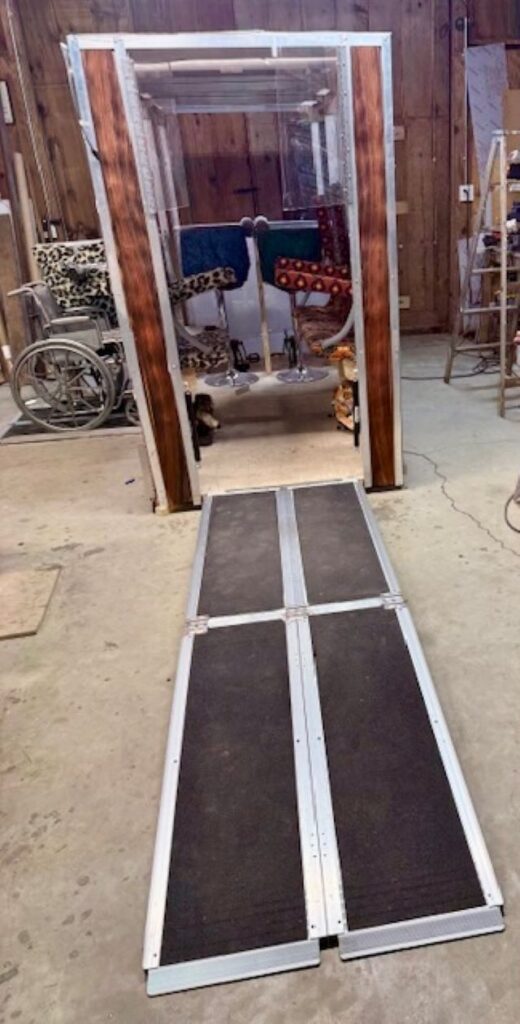
4’x10′. NYC legal pedicab. Wheelchair accessible.
Go, baby, go!
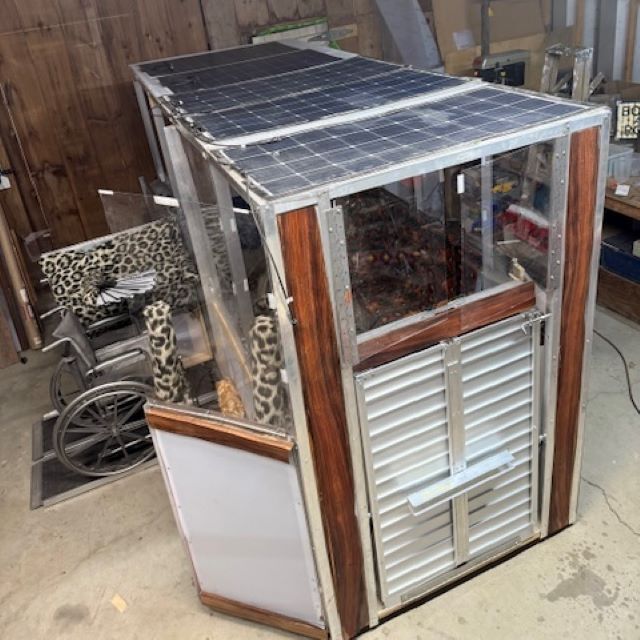
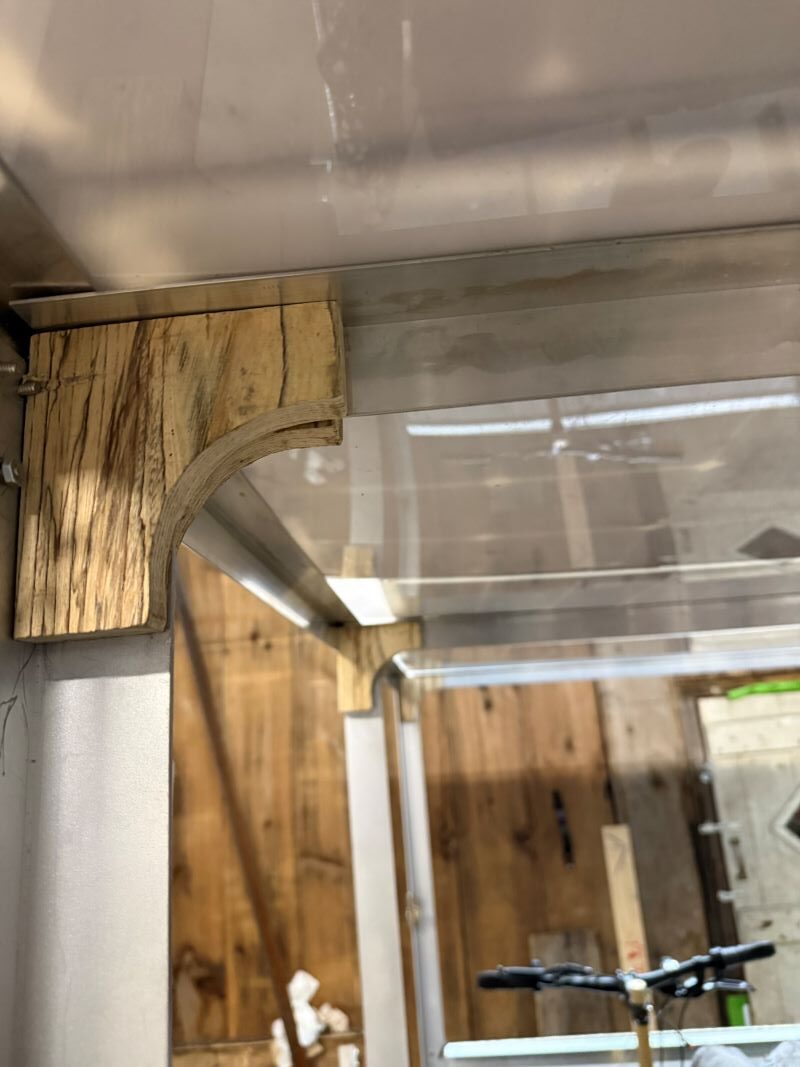
The steel frame will support plywood, aluminum, and polycarbonate body.
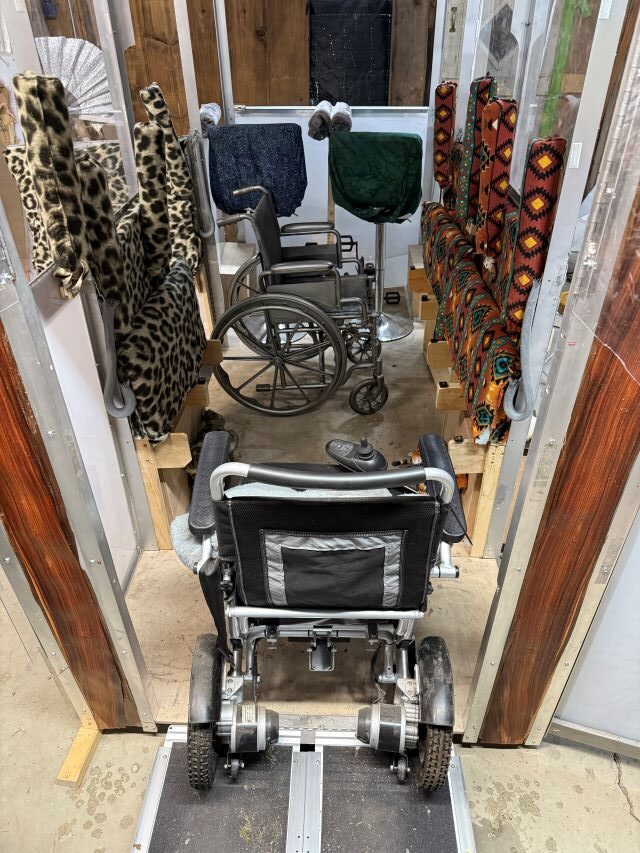
Room for two attendants too, one seated up front, one standing/leaning.
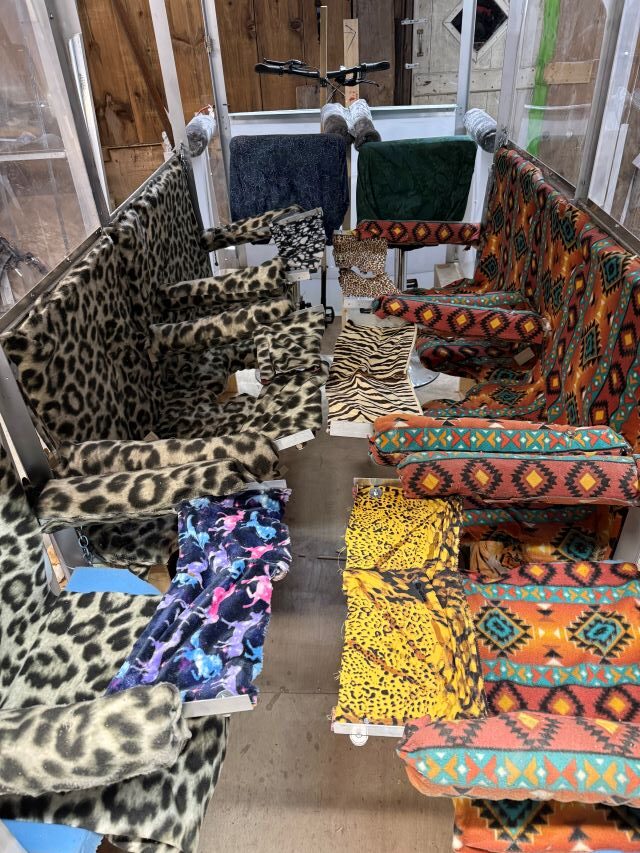
16 armrests. 12 fold away
8 windows. All open and close
7 seats. You can stand too
6 doors. Easy in and out
6 small trays. That also fold away
5 solar panels. To help power
4 wheels. 2 of them motorized
2 ramps. 2 wheelchairs/cargo
2 can pedal to help power
1 must steer and control speed
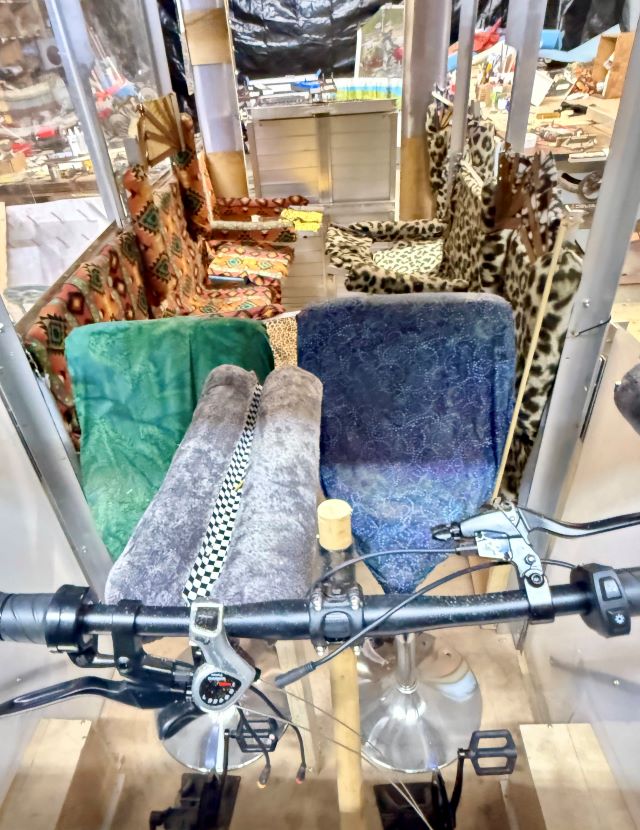
Armrests that can go vertical to permit wheelchairs easy passage and trays that can deploy into convenient surfaces for laptops or lunch.

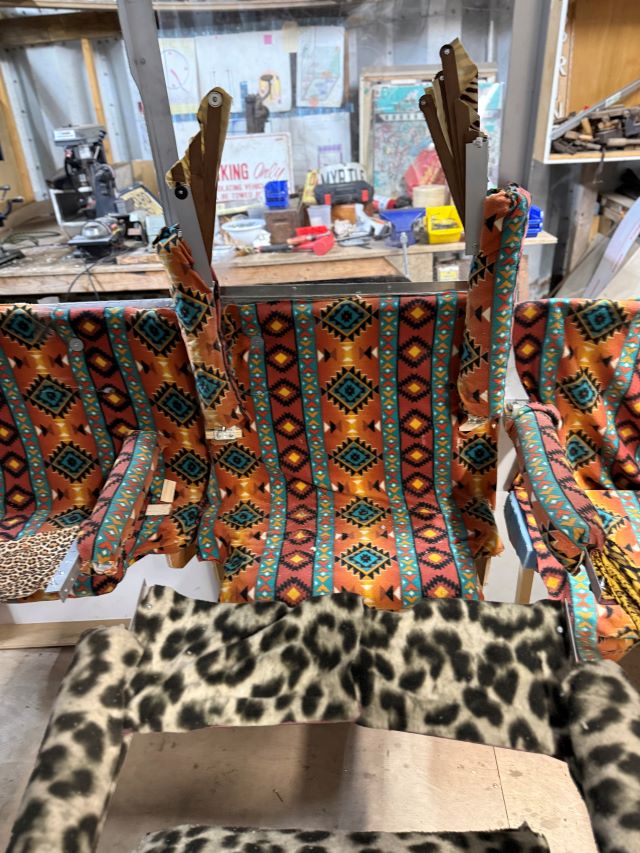
Foldaway trays on armrests are coming together with magnets.
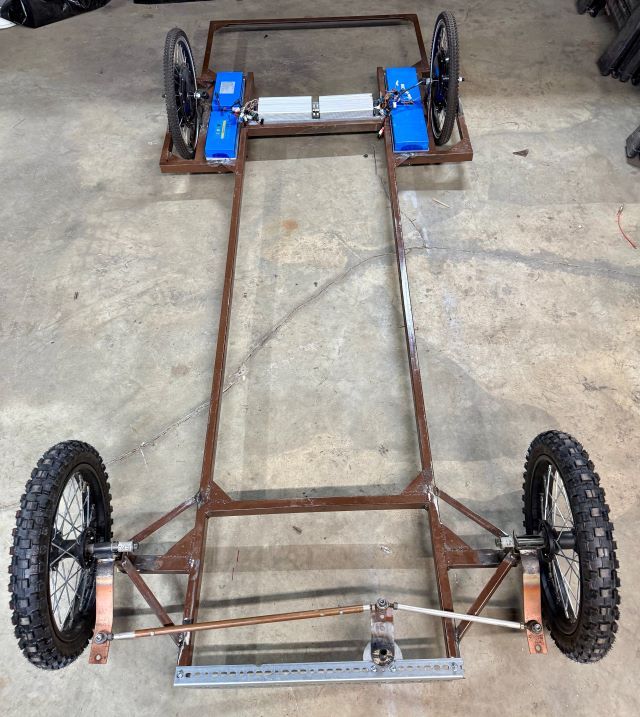
A steering mechanism, batteries, and controllers
Pedicabs are finally being considered a subject worth discussing.
The upcoming conversation is long overdue and very welcome. The new administration is a fresh opportunity to bring common sense to the pedicab industry. Beyond the obvious problems, the illegality of helper motors and prevalence of rip-off operators, there are a host of other needed changes:
This is not just a fringe activity, which exists, almost exclusively, to serve well-healed tourists. It is instead an important form of surface transportation, essential to move large numbers of people, (and goods) comfortably, smoothly, safely and economically, throughout the city. It can be an important new addition to the services available to those in wheelchairs. It can provide a vital link to those, especially in transit deserts, to connect to the extensive public transit system, to help fill the many gaps that now exist.
One major change could expand the role of pedicabs in many neighborhoods. These vehicles could follow a designated route, which intersects transit and, during parts of a day, follows a path which includes at least one shopping area, and one recreational or public space. The operators of such vehicles would be able to establish relations with all of the commercial and professional spaces along this route, craft a way to promote their businesses by giving them advertising on the vehicle, and access to their printed brochures and digital platforms. By, additionally, becoming the best local expert on available needs, including rentable spaces, and employment, the operator can generate serious income for themselves, along with the respect that comes from being a valued source of information, a neighborhood’s mobile concierge.
There are good reasons why some might just want to improve the existing system and simply make it little better. It grew into its current configuration, to a degree, because that is what the public wanted. It fit. It’s a fun way to explore a big park. On the other hand, there has been no effort to explore the ways in which the benefits of this activity could be maximized. When we created the industry, thirty years ago, it was enough to demonstrate that human-scale three-wheeled, human-powered vehicles, should have a place in a crowded urban environment. We also felt that small-scale entrepreneurship was a preferable form of employment, requiring a higher degree of self-reliance, and better income possibilities as well.
The shared vehicles concept we used in 1994 for pedicabs, was also a model, that has now turned out to be a very popular one in the city for different forms of bikes and ebikes. The problem now, is the narrow frame of reference that is usually employed, when discussing this important subject. It doesn’t even include its obvious sibling, cargo transport, or the potential to radically improve access to wheelchair mobility using the same equipment. Similar to the way that AI is changing the subject of information, the radical efficiency of lithium-ion batteries and tiny electric motors is performing that trick for human-scale urban transportation of all kinds.
The changes that need to be considered:
Scale: The prototype vehicle which I am now building allows for seven passengers, one of whom may pedal if they want. The Yellow Taxi industry was determined to limit the potential utility of this new form of travel by coming up with the absurd limit of three passengers. What restaurant has tables for three people? This also made certain that these vehicles could never be considered part of the transport system, would remain a trivial competitor. These crippling regulations have also served to keep the conversation about their potential to evolve and grow from happening naturally. Heightened interest in the ongoing climate catastrophe, in recent years, has now made harvesting the benefits that are now available to us from these advances, an urgent necessity.
Motors: Now that pedaled cargo vehicles are permitted to have these small “helper” battery-powered motors, there is no reason that they are not permitted on pedicabs. It might even be legally prejudicial. The industry will have no problem with a speed limit of 15 or 20 miles per hour, so there can be no objection to these motors being used. Some feel that it is sensible to insist that motors be pedal-activated as opposed to throttle-activated, in order to maintain the identity of these vehicles as human-powered. These motors also make heavier loads and needed weather protection practical, and age and gender diversity will benefit from this change.
Postures: Passengers can stand on buses and trains, which go much faster than pedicabs. The reason is that standing takes up only half the room of a seated person and more passengers mean a more economical system. Straps and poles enable users to feel comfortable while standing and it is considered a safe and ordinary way to travel. Why should this be forbidden in a pedicab? As it becomes a common form of transport, rather than an expensive indulgence, and cost is a factor, this should be an available alternative.
Abuses: like playing music at too loud a volume, one warning should be sufficient, and the second offense you must lose your vehicle or pay a huge fine, $1000 or more. Those who behave as though their unacceptable actions, which do great harm to others who are trying to make a living, are alright, do not belong in the business.
Stops: If one key purpose of these vehicles is to provide a form of transportation, they must be allowed to pick up a variety of passengers individually which current regulations do not permit. Clear signage and regular loading areas can aid in this change.
Advertising: Is permitted but no illumination of it, even though it is 30 years later and this form of advertising is now ubiquitous. If these vehicles begin to ply certain established routes, this kind of advertising will be a valuable aid to local businesses, who can use it to gain more customers and clients. Local residents and visitors can benefit from a better awareness of the local availability of goods and services.
Pricing: Signage must be huge and not displaying it properly should get your ride taken away and huge fines and loss of vehicle for subsequent offenses. No criminal activity should be tolerated at all and punishments severe to discourage bad practices.
Insurance: Requirements cannot be much greater than those imposed on yellow cabs, who cause much more damage and injuries than pedicabs, The existing system may be totally illegal and prejudicial.
Parking: On the street and hook-ups to charge batteries should be made available for overnight charging. These lightweight, small, quiet and safe modes must be considered as the most desirable form of transport and given every advantage to encourage their use. Multi-passenger and weather protected bikes are the next and needed step in building a system that uses minimal amounts of resources, with minimal negative impact on the environment and on the wellbeing of others.
Criminality: The historical lack of enforcement of existing regulations has permitted the proliferation of drivers who are willing to take advantage of potential customers by concealing rates and otherwise behaving badly. This would never have been tolerated in other aspects of the city’s commercial activity but it has been rampant here, for years. There is more fining and capture of miscreants’ vehicles lately, but the low level of punishment and random nature of the regulation has given this profession a reputation as potentially larcenous, which is unacceptable, and very damaging to all businesses and the city’s own reputation. Enforcement must be very harsh until this situation is remedied. Tolerance of criminality is a flashing sign of a city’s decline and cannot be tolerated by those in power.
Design: There is basically only one design of pedicab currently and it is a throwback to the 19th century, rickshaws that used humans as chattel, disposable and without humanity. Bikes are a big improvement over the original and motors make the task doable, but it is popularly viewed as a nostalgia-based novelty. It offers passengers a somewhat high degree of comfort and full protection against harmful elements, while the operators are expected to brave current weather conditions, no matter how harsh, wind, rain and snow, and accept this uncommon degree of abuse, without recourse. It is time to bring this profession into the 21st century, on behalf of both the operators and the general public.
Ubiquity: There is no reason why small-scale passenger vehicles, what we call pedicabs, should not be plying the streets throughout the five boroughs and in many types of neighborhoods. Since they have not been doing this historically, it would take time for a new form of local transport to be fully acknowledged, and its use as a delivery vehicle and for local phone-booked rides, would need to be interspersed with regular runs until operating at maximum intensity. Instead of standard models of new vehicles, (even my own), dominating, in many neighborhoods, local artists and craftspeople can be induced into cooperating in fabricating unique conveyances, that even may help to signify and give identity to their surroundings. Here is a local profit-making business, housed inside some mobile art, that can also serve a host of needed, various, purposes, like giving the usually homebound an opportunity to breathe some fresh air, with ease, and a little change of scenery, from time to time.
In sum: While getting the rip off artists off of the street, legalizing motors, and lowering insurance rates, are all important, so is the exploration of the many benefits that this form of travel has the potential to provide. Could this be one of the most gratifying and profitable forms of labor available to those working hard, under difficult conditions and with possible upside social and other rewards? Should there be an academy that drivers attend in order to become completely familiar with both the city’s assets and rules of the road? This is worth considering, along with all of the best ideas for moving forward, culled from both inside and outside the industry. What does the public need from this vital, potential surface transportation lubricant, and what do operators deserve, as their working conditions? There is no question that it is time for this important conversation to begin.
Contacts:
Email: StevenStollman@gmail.com Tel.: 212 431 0600