Creating and producing the lightest

while most comfortable, vehicles possible is the aim here. Users should be able to assume any posture which is their preference, from standing, to leaning, to sitting and recumbent. Also, the clear, outer, weather-protecting shell, must easily be partly, or entirely, rendered minimal, in accordance with the weather and desire for privacy. This is a low-speed vehicle, roughly the same as bicycles, 15-25 mph, most suitable for urban/suburban use. Multi-modality is optimal since it enables the most economical operation. A higher speed version, more suitable for less dense environs, presents a host of additional safety issues, which will, naturally, take more time to successfully resolve.

This is a serious matter but a case can be made regarding this process as similar to the one that motivated the creation of the Kinetic Sculpture Movement. It has been amply demonstrated that a human-powered vehicle, even without the added benefits of a solar/electric element, can be phenomenally efficient, while also being construed into an infinite variety of disguises and presentations. It can be a duck, or a fly, a mock Cadillac convertible or guided missile, and still function magnificently as a conveyance. It can also add a huge element of pleasurable whimsey and otherwise colorful creativity to grey concrete sidewalks and dark asphalt streets.

The surrender of our public space to oversized, dangerous, toxic, and homely machines has negated these spaces’ suitability for any other, more appropriate purposes. Recreation and relaxation, while surrounded by loud and ill-mannered devices, are impossible. Unless in a park or other designated space, the atmosphere is so obnoxious that only street workers, like deliverers, who must be there, regularly populate it. Urban spaces are becoming more and more congested, some impassable, and finding refuge from them by avoiding them, is the most popular remedy.

While people who must be there, like vendors working hard to make a living, are regarded as a nuisance, an array of obnoxious machines are welcomed to monopolize the space while pumping poisonous gases in their wakes, as long as they are a lubricant for profit-making, tax-generating activity. Given the current environmental catastrophe, they are also a clear threat to our future. Unmentioned and completely unacknowledged is the tremendous psychological damage caused by our submission to these constant assaults on our physical and mental health, without any measurable resistance.

Efforts to improve this situation must be urgent yet joyous. This does not involve anyone having to give up anything that they now utilize. To a society in the grip of various addictions, to ease, for instance, the threat of losing anything once possessed, would be fatal to the enterprise. This plan involves providing access, eventually to everyone, to an entirely new fleet of the most creative, fun, and efficient vehicles imaginable.

Fortunately, the result of this undertaking will be the diminution in the use of the ugly, uncomfortable and environmentally and psychologically damaging multi-ton monstrosities, which now fill our streets. This opportunity should serve to draw the attention and participation of many creative and caring individuals from everywhere, since virtually no developed places on this earth are free from the life, and injury-threatening impacts, of having to share their vital public spaces with endless marauding armies of treacherous machines. The talent that is needed to do the work is out there. It just needs to be aroused and focused on the task at hand, to save this planet, while having a wonderful time doing it.

Trip Media

A Collection of information

in various forms, colorful, relevant, important, diverse, and local.

To be provided:

As a mobile exhibit/display, mounted on a New York City pedicab,

As a 24-page full-color tabloid,

As a monitored website, geared to a locality.

To structure this as a worker-owned cooperative, with the intention of using profits to expand into as many places as it is relevant.

To do this in one neighborhood to begin, in order to demonstrate the validity of this new resource to communities, based on their needs, for movement, and for useful information.

To collect examples of the many talents and varied experiences of local residents and provide a means for them to share their gifts with deserving others.

To develop the means to present a wide variety of articulate statements on vital issues, to begin conversations that can lead to more informed understandings.

The 24 or more mounted panels will focus on a wide variety of different subjects. Some will be established, such as local history and a guide to services, others will be changed on a regular basis, evolving as further contributions permit.

Various information will need to be researched and established, and tasks performed, to accomplish this project.

These include:

Choosing the neighborhood, route, and stopping points

Finding three or more operators and orienting them

Financial and legal paperwork must be completed

The website must be designed and created to reproduce display and permit interaction.

The system for mounting and displaying artwork must be tested and perfected.

Choosing the rarely-seen International political cartoons that occupy half of the panels.

Capturing all of the artwork and information in 3 Mediums, posters, paper, and website.

Using the reproduction of artwork, using archival ink and papers, as an income source.

Local history must be researched and written, updated when possible.

Postings relative to available spaces, and employment can generate financial support.

A calendar of local personal, and creative events, healthy exercise possibilities, etc.

Offerings of free goods and opportunities, education, rides, help with other shared needs.

Space for community-connected activity, political, cultural, environmental, joy, & pets.

Ads for local businesses and for-pay services can help provide income for this effort.

The operations of the pedicab are the most complex elements of this proposal.

Some part of the time, it would operate on a regulated route. It would connect to local transit and other important locations. There would be no charge to passengers but they would be encouraged to tip generously.

At other times, the vehicle would be available for private tours and personal destinations.

They would also do deliveries as available.

Their most unusual feature is that they would stop at designated locations, at certain times, and deploy their displays, which are mounted in spring-loaded shades. Copies of the displayed panels, artwork, etc., printed on archival paper and with archival inks, can be purchased.

They would also collect material from local residents to be incorporated into further displays. Optimally, operators would become very familiar with their surroundings and begin to function as participants in ongoing events and discussions, the best-informed person on many local matters, including opportunities relating to employment and available space and other resources, a griot, and a concierge.

This proposal is being put together, initially, by Steven Stollman, a founder of the NYC pedicab industry, a designer and fabricator, and an environmental, transportation, and community activist. There is further information on this project on www.LightWheels.com including an animation of the panels being displayed on the “Half” vehicle, a prototype of the one intended to be used as part of this undertaking.

The Privy Council

The Idea

Our failure to guarantee that we have a place to relieve ourselves when the need arises seems trivial until we need one. Then you realize that, without a doubt, this is a much more important issue than is commonly realized. It is also a vivid example of the sharp differences in access to the necessities of life among the members of our different classes and a powerful indictment of our current social and political system. If we can’t acknowledge the most indisputable of our commonalities, how can we ever confront and resolve the more complex and difficult challenges that confront us?

A Plan:

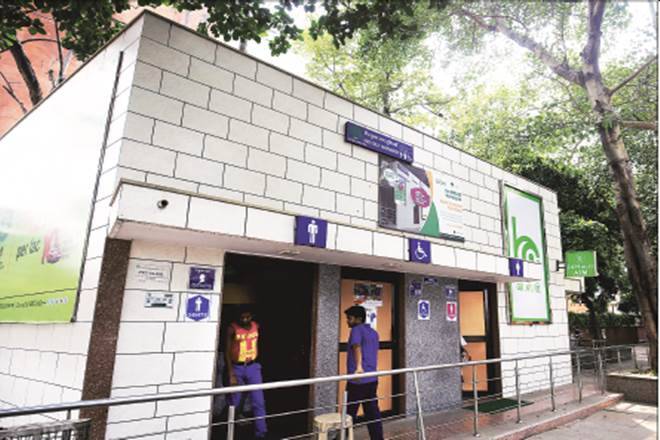
Governments are, as a rule, not interested in trying to provide these facilities to the public if they can help it. They are expensive to construct and maintain, possibly messy, and frankly embarrassing. It is preferable to ignore the issue and leave the private sector to carry the burden. If you are well-heeled and well-dressed there are always plenty of places to find relief. If not, there are not. As the population ages, this has gone from a problem to a catastrophe and can not be allowed to continue as it is any longer.

In some major European cities, like Paris and London, it has been the rule to provide attended and ubiquitous facilities for many decades. The health risks that accompany ignoring this issue are obvious and unavoidable. The means to provide enough political pressure to change these conditions are not easily generated. Using income from toilet-mounted billboards to pay the freight has not worked here, replacing one form of pollution with another. More creative and effective strategies are needed and they are obvious:

Combine public toilets with other vending and income-generating opportunities so that these locations can be attended and of the highest quality

Incentivize restaurants and those others with existing facilities to make them more widely available

Establish a program of both urgent and regular maintenance to relieve these more accessible locations of the most burdensome aspects of this situation

A network of support groups, including public health, homelessness, community, and human-interest organizations can combine their influence to establish an effective force to confront this issue and deal with it successfully. Some international groups are already working to raise awareness and concern about this. They need to be bolstered by other forces, both local and large like hospitals and doctors organizations as well as potentially influential individuals. This may not be a glamorous matter but it touches everyone and is a measure of our willingness, as a society, to put aside our embarrassment and deal with our most universal problems.

World Toilet Day

Friday, November 19, 2021.

Valuing toilets

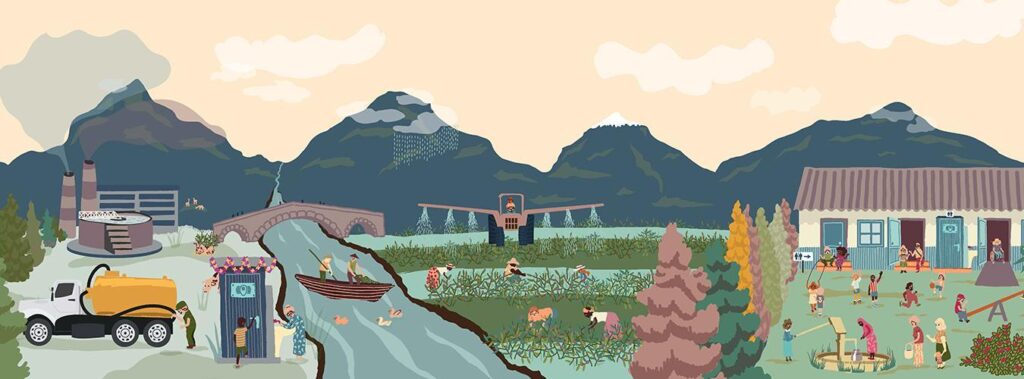
“Who cares about toilets? 3.6 billion people do. Because they don’t have one that works properly.“ That is the starting point of this 2021 Campaign for World Toilet Day. The Observance celebrates toilets and raises awareness of the 3.6 billion people living without access to safely managed sanitation. When some people in a community do not have safe toilets, everyone’s health is threatened. Poor sanitation contaminates drinking water sources, rivers, beaches, and food crops, spreading deadly diseases among the wider population.

Continue reading on UN World Toilet Day page.

Photo by UN-Water Project

When some people in a community do not have safe toilets, everyone’s health is threatened. Poor sanitation contaminates drinking water sources, rivers, beaches, and food crops, spreading deadly diseases among the wider population.

Links to Some Ideas

To get you started

American Restroom Association

World Toilet Organization

Photo source https://www.worldtoilet.org/rainbow-school-toilet/

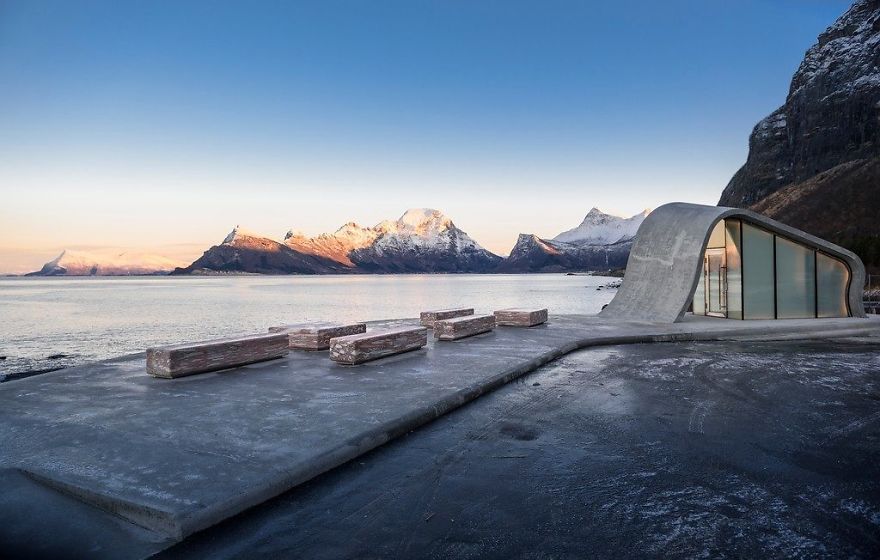
Norway

https://www.visitnorway.com/plan-your-trip/travel-tips-a-z/norwegian-scenic-routes/worlds-best-toilets

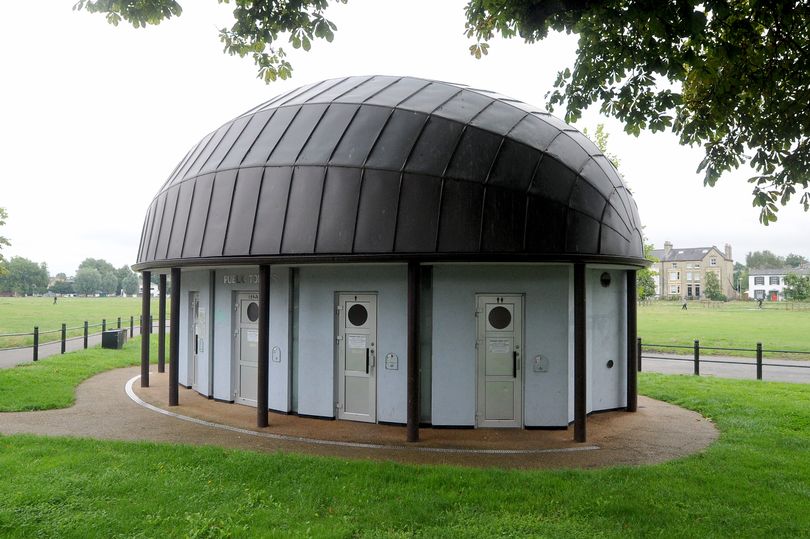
The public toilets reopening in Cambridge city centre this weekend:

https://www.cambridge-news.co.uk/news/cambridge-news/public-toilets-reopening-cambridge-city-18530499

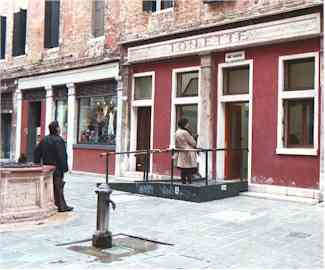
Venice Italy

https://europeforvisitors.com/venice/articles/public_toilets.htm

Carry change for toilets, which often have turnstiles at the entrances. Public WCs of AMAV, the Venice sanitation authority, charge a mind-boggling €1,50 unless you have the Venice Connected pass. Larger museums (such as the Doge’s Palace) have attended restrooms with posted fees. In other museums and galleries, toilets are often free.

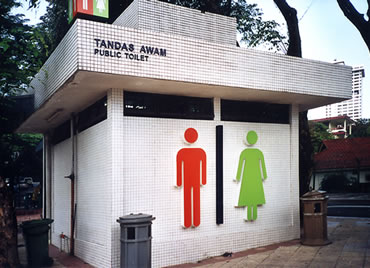
Malaysia

https://says.com/my/imho/please-stop-doing-these-in-public-toilets

India

https://www.financialexpress.com/lifestyle/swachh-bharat-condition-of-public-toilets-continues-to-be-dismal/1692405

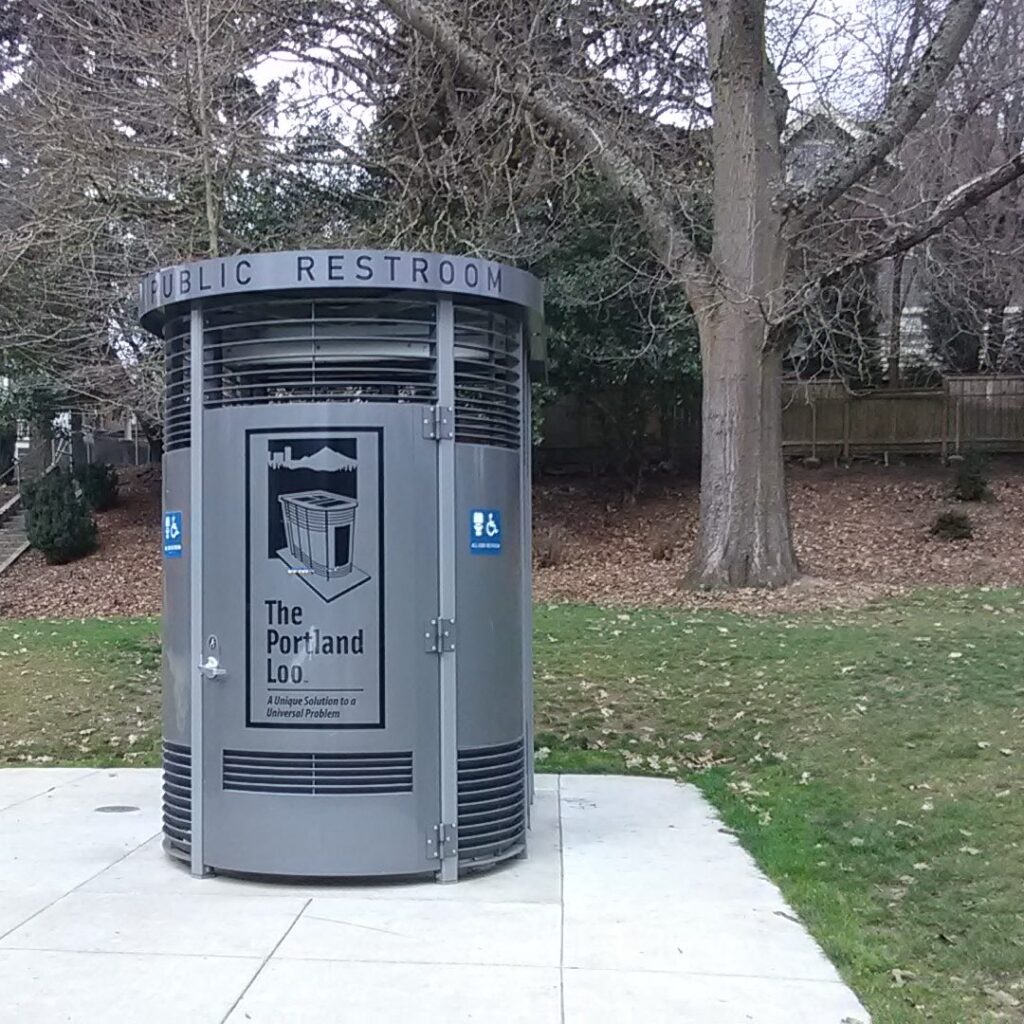
The Portland Loo

Tadao Ando

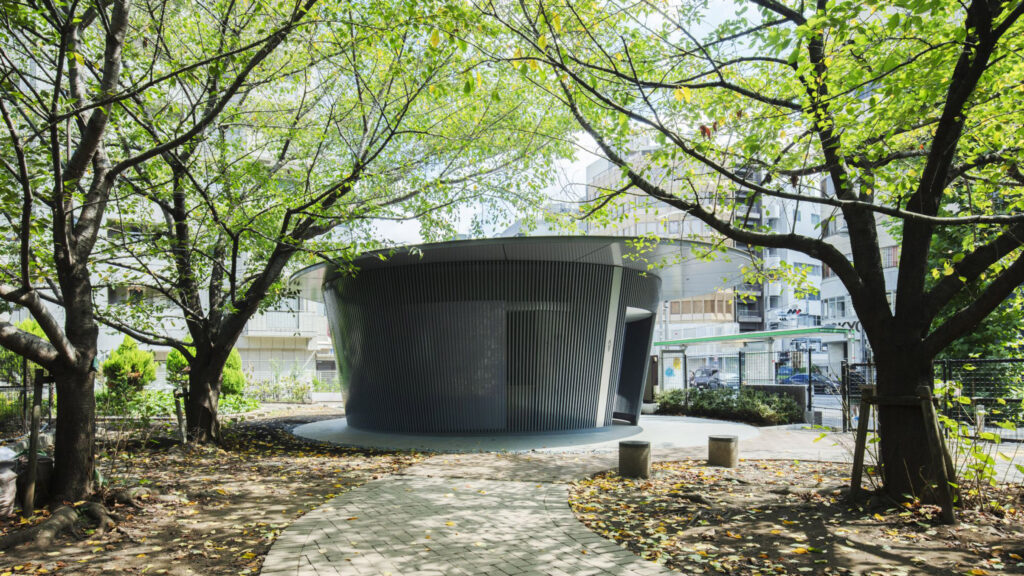
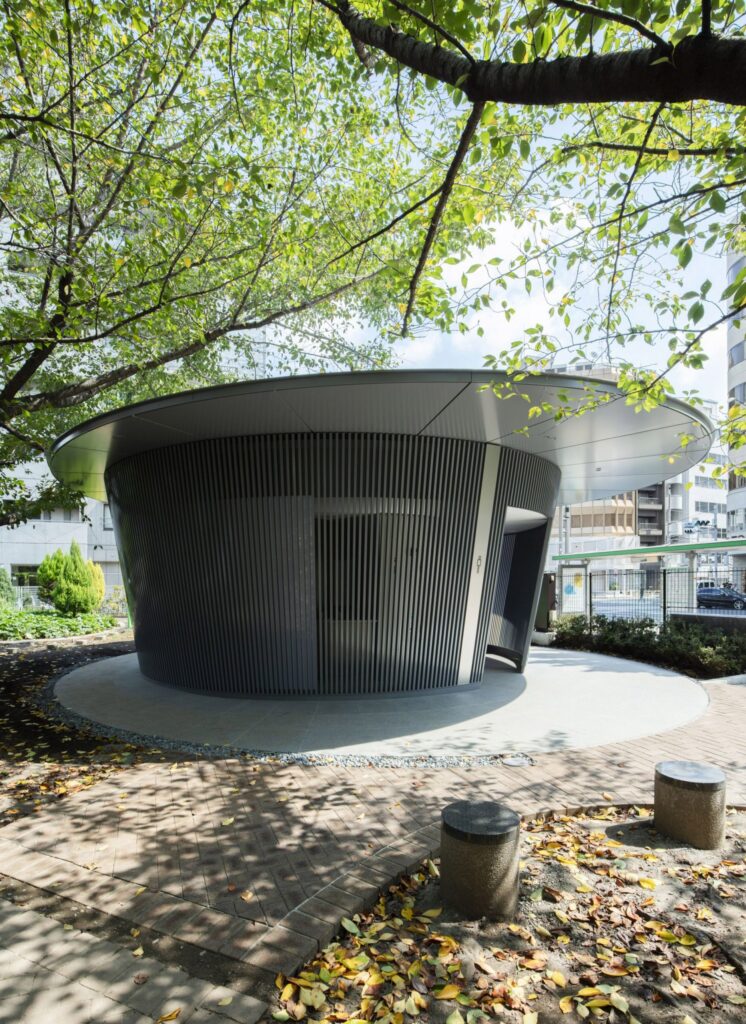
Tadao Ando creates a circular public toilet surrounded by cherry trees in Tokyo

source: https://www.dezeen.com/2020/09/14/tadao-ando-toilet-tokyo-jingu-dori-park/

Pritzker Prize-winning architect Tadao Ando has completed a circular toilet in a Tokyo park as his contribution to the Tokyo Toilet project.

Built-in Jingu-Dori Park, the toilet was created as part of a scheme run by the non-profit Nippon Foundation to upgrade public facilities in the city’s downtown Shibuya district.

The initiative has already been seen by toilets built by Ando’s fellow Japanese Pritzker Prize-winners Fumihiko Maki and Shigeru Ban.

Surrounded by cherry trees in a small park around a five-minute walk from Shibuya Station, Ando derived the toilet’s shape from his desire to create a structure that enhanced the park.

“I sought for this small architecture to exceed the boundaries of a public toilet to become a ‘place’ in the urban landscape that provides immense public value,” said Ando.

“Using this clear and simple reasoning for the concept of this structure, I chose to utilize a circular floor plan with a spanning roof and engawa [Japanese porch].”

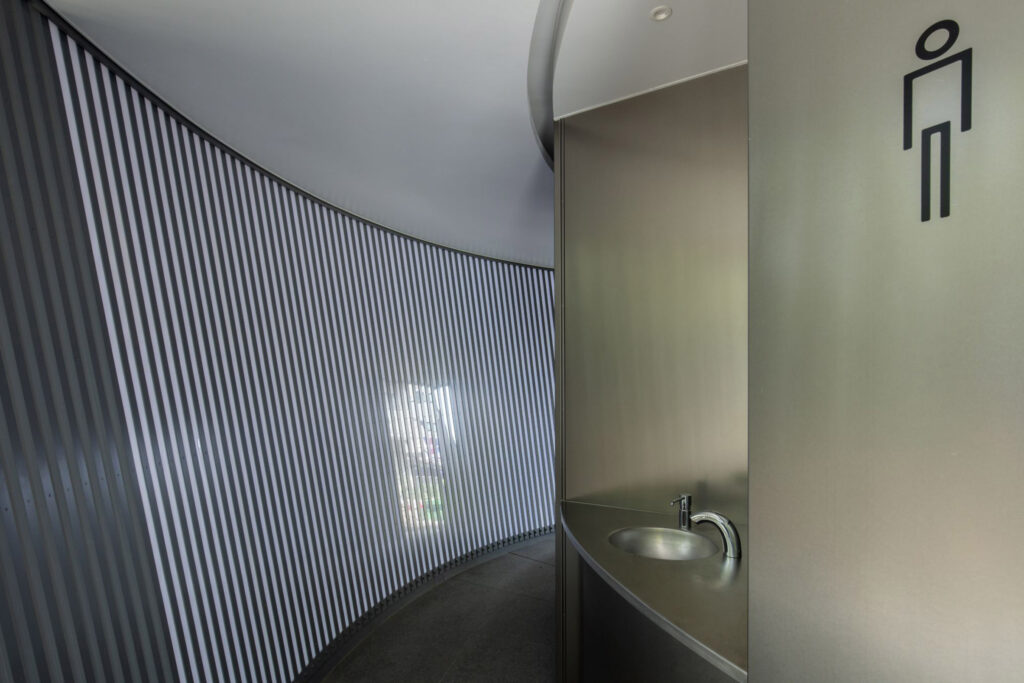
The circular toilet block, which contains a male, female, and accessible cubicle along with external sinks, is wrapped in a wall made from vertical metal louvers. This wall creates privacy while letting air circulate.

The whole structure is covered with an angled roof that overhangs the toilet to provide shelter.

“It was vital for me to make a space that was comfortable and safe,” said Ando. “Visitors can move inside a cylindrical wall of vertical louvers to feel the comfort of the wind and light from the surrounding environment,” he continued.

“A feeling of safety will be emphasized by the free and centripetal circulation which passes through to the other side. This toilet tucked away in the greenery that is Jingu-Dori Park will be known as ‘Amayadori’.”

Ando’s toilet is the sixth to be completed as part of the Nippon Foundation‘s Tokyo Toilet project. Shigeru Ban’s toilet design comprised a pair of transparent blocks, while Fumihiko Maki topped his toilet block with a “cheerful roof”.

Nao Tamura based her bright red triangular toilet block on the Japanese craft of Origata and Wonderwall referenced primitive Japanese huts for its design. In total 16 toilets are planned as part of the project.

Photography is by Satoshi Nagare, courtesy of The Nippon Foundation.

by https://www.wim-wenders.com/news/

Harvard:

The Shady Times

Volume #1 Issue #1

24 Pages

10” x 16” printable areas

Must be re-configured for posted version

Categories:

Permanent

Maps with locations of Social Services, Bathrooms, Transit, Help (1)

Historical Info (2)

LightWheels.com (1)

Route and highlights (2)

Ad Directory (2)

Changing periodically

Political Cartoons (6)

Events (2)

Local contributions (6)

Artistic

Opinions

Achievements

Problems and solutions

Job openings (1)

Space available (1)

Total 24

HELP!

HELP! The only two states that allow recreational pot use are playing

Call it the Pipe Bowl

The new Mayor of New York has made it one of his first priorities to reduce the number of roadway casualties in that city to Zero, from the 271 who currently expire each year, in addition to the 65,000 who are injured. This is more than an ambitious and very difficult, though thoroughly admirable, goal. It is really an effort to evolve the entire population of this place, past the assumptions of unavoidable brutalities that this transportation system invariably provides, as a “normal” feature. It is gratifying that the Chief Executive seems to understand that the need here is tectonic and not cosmetic.

Partly this is a matter of enforcement. Setting up an operation in Brooklyn where cars were ticketed for failing to yield to pedestrians was a trial balloon, to see if the publicity surrounding this was sufficient to have an effect on driver’s behavior in the short and long run. Another much less successful effort, to ticket pedestrians for jaywalking, became a disaster when a Chinese-speaking man was apparently thrown to the ground by a police officer and sustained head injuries. Regardless of such anomalies, everybody understands that the ultimate purpose here is to reduce harm to unprotected pedestrians, and cyclists. In a city with a 30 MPH speed limit, 60 MPH is standard. The Mayor is the Commander in Chief of the Police Department and he can single-handedly direct a comprehensive overhaul of our traffic rules and how they are enforced.

I believe that the other most important factor in engineering this change will be the rapid proliferation of small, safe, human-scale vehicles, to replace the far more dangerous industrial-scale ones that currently dominate the landscape. Not only will this result in saving many lives and preventing numerous serious injuries, but it will also provide major health, environmental and other significant benefits to society. Regardless, It is not going to be easy reining in the taxis, flying down the street, the enormous garbage trucks and buses, and huge SUVs with their relatively limited vision.

In order to accelerate the process of providing ourselves with a new range of vehicles, we will need to incentivize the designers and builders of these devices with both recognition and financial benefits. Pavlov proved that animals are motivated by rewards and will respond to them in a predictable way. Since there is no marketing venue for these objects their introduction over time has been nearly impossible. The advent of the internet and its means to inform the public about novel ideas and attainable objects can help to overcome the historical resistance of the conventional marketplace, bike shops, and car dealers, to provide us with access to these machines. When Rob Cotter used Kickstarter to get his seed money to produce the first multi-modal ELF it signaled a new channel opening up between makers and those who know that this is a vital path to explore. Building on that realization is a new task and a welcome one. His current success in expanding his enterprise will alert many to the increasing value of these new opportunities. Hybrid human/electric-assist vehicles are the wave of the future, and nobody can deny it anymore.

It is not a motorcycle but it is a cycle with a motor, so even the language conspires against us. It is built on the scale of a bicycle, minimal, so the contribution of human power is relevant, and the stored energy is supplied through advanced design batteries rather than fossil fuels, petroleum, so it is considered exotic. In fact, many of the best designs were already made in the 19th century and will simply need to be updated for this day and age.

The contributions of creative people, artists, and craftspeople are the critical element. The importance of fresh thinking and the use of incredibly durable materials, like polycarbonate and composites, will change the game. Just this week it was announced that an important breakthrough had been made in the use of sugar in batteries, far more powerful than current ones and much cheaper. The amount of effort going into the research into nanomaterials, carbon fiber and all the rest is bringing home the relevance and importance of weight and scale in the design of better forms of transportation.

Mr. DeBlasio’s declarations about safety need to focus on the greatest challenge, reducing the throw weight of the lightly-guided missiles that fill all of our streets. As long as something has a certain bulk and weight, it is automatically a candidate to be regarded as an offending object due to its potential to do harm. The problem with industrial-scale vehicles is their momentum, calculated as weight times speed. Being hit by a multi-ton object moving at 40 miles per hour is often fatal. When the speed is reduced to 20 or 30 miles per hour this hazard is greatly reduced. When the weight of the vehicle can be measured in tens rather than tons of pounds, the risks are practically eliminated. Human-powered, electric-assisted vehicles are nearly on the same scale as a person walking along a road. At the 10-15 MPH that they normally move, the danger is further made smaller and the visibility provided by a relatively open design adds to their safety too. Of course, they must be operated responsibly.

The Mayor is to be commended for taking on such an important task but errs, at least modestly, in his campaign against carriage horses in this Year of the Horse on the Chinese calendar. We need to remember where we came from and to cultivate our awareness and appreciation of our ties to the rest of the animal kingdom. You don’t have to raise goats or love mice but making the connection to your fellow species and acknowledging this linkage is a good thing and along with such arts as handcraft and Yoga, puts you in touch with forces, otherwise invisible to the naked eye. Muscle-power is awesome, both our own and that of other creatures, and recognizing its appropriate role in a world ruled by mechanical and electronic forms of power is essential to our self-understanding and self-realization.

Whitey, the horse that pulled my Father’s fruit and vegetable wagon along, in the early years of the 20th Century, made it possible for him to cover enough ground to pay his bills, start a family and make his way up in the world. How could he have done it otherwise? The tiny One Horsepower motors required to help food deliverers and pedicab drivers do their jobs without having to punish their bodies are just as vital to our ability to provide a humane and decent world, as is our willingness to co-exist with our natural counterparts.

Banning little electric-assist motors, for no real reason, is just as cruel as it is to send the carriage horses to their doom, to erase them from our sight. Because of the excellent fertilizer that they manufacture can not find its way to a Community Garden nearby? It seems, in fact, that they are extremely well taken care of, at least at the current time. Replacing them with multi-ton “replicas” will only heighten our sense of artificiality, Disney on steroids, which is already far too prevalent, and permanently wipe out one of the few fragments of natural and historical authenticity remaining. Sadly, Mr. Mayor, It will do this harm while simultaneously reinforcing the mistaken and unhealthy sense of entitlement, that the oversized and overpowered urban-inappropriate forms of transportation, that are so hazardous to our health and which currently dominate our space, depend upon. Let’s hear it for muscle-power (with just a little electric-assist please).

COCOA  COffee  COnversation  Action

The original colonial Tea Party was a bit of blame-the-victim, racist, black-bag op terrorism, with a spoonful of patriotism, and so is the current one for many of its most passionate adherents. The difference is that back then, we were rising up against protected monopolies and giant corporations, whereas the current version is largely funded by these megaliths.

We can do better, much better. If we need a theme song, how about the Automat’s egalitarian and inclusive “Let’s have another cup of coffee”?  We can organize friendly people in all the coffee shops and let the people who have trouble with including everybody have tea shops. We can have Starbucks and the corner diner and the morning breakfast table and they can have the crumpets. We can have meetings morning noon and night, all over town, to figure out how to take back this puppy from the beast. Confused and frightened people, looking for help are being told, ”Sharing is Socialism”. So elevators and trains must be hotbeds of Marxism, and water mains and sidewalks a sinister, devious plot, to tie us together and make us dependent.

So what is COCOA, Coffee Conversation Action?  It’s not a Party exactly, (even though a little fun is always a welcome relief from the tedium), or a means to anoint the already too self-important with additional titles and privileges. Rather it’s a minimal mechanism for building an energetic, ongoing, constantly-evolving plan to maximize the chances that our species can have a healthy future on this rock. It is also an action agenda, without hysterical, lying demagogues, and without non-stop, one-dimensional self-interest masquerading itself as the common good and crushing our humanity in its path. We had sound-outs and teach-ins, but we need a continuously-refreshed framework that frees us with the truth instead of confining us in lies, open for business wherever and whenever sippers meet.

That’s the Coffee Conversation Action Agenda, COCOA2. Namely: Move over a little so there’s room for everybody and when it’s freezing out there, who doesn’t need something hot to drink to help take off the edge? No matter how cold the facts get out here, friend, in the coming days, please remember what your Mom told you about what you had to do if you wanted to get into Heaven, and make mine hot Cocoa thank you, not hate-filled Cuckoo.

NUTRITION, HEALTH, AND TRANSPORTATION

THE BIG  QUESTION;  IF YOU ARE DOWN TO YOUR LAST TEN DOLLARS, DO YOU GET FOOD, YOUR MEDICINE OR GAS FOR THE CAR?

We need water, air, and the occasional snack, to survive. Clothing and a roof over your head may not be quite as essential, depending upon local climate and social customs of course, but are still pretty important. If you are a person of deep faith, you have the conviction that all of this will arrive, in good time, due to the grace of the Almighty. All that is required of you is patience and fortitude and the ability to suffer the pain which comes from realizing that there is still something missing from this picture. It can even feel as if all of this seemingly undeserved and unnecessary distress was put there on purpose, to put your faith to the test, since it feels otherwise to be so purposeless and random.

If you are more modern in your ideas, you might consider it the job of the government to make sure that you can fulfill these basic, human needs. Some would put companionship in the “absolutely needed” column too, but, aside from our sentimental preferences, we have a demonstrated ability to exist, even prosper, without any nearby two-legged accomplices, for quite some time. Got to have drinkable water and breathable air no matter what though. So why are our supplies of both under attack and in jeopardy? Are we completely out of our minds? Do we think that playing Russian Roulette with our essentials makes the game more interesting, raises the stakes and creates excitement out of the mundane? Is it possible that what we have always taken for granted, as belonging to us, is being completely commodified, and that everything has, or will soon have, a price tag, even the air we breathe?

Meanwhile, if so much has been reduced to numbers, pushed so far into the abstract that we can hardly recognize its connection to our reality, how do we push back and reassert the need to recognize, acknowledge, even celebrate that linkage? Since passivity is the ocean that we swim through to reach our life rafts of activity, it is no wonder that there is so little coordination amongst us in this continuous, ongoing process. Each person is too involved in staying afloat, paddling towards their destinations and making sure that there is plenty of oxygen in the immediate vicinity, to worry much about anybody else, except their own blood and kin.

So, if a problem arises which requires the coordinated effort of these various arbitrarily-distanced souls, there is no mechanism for enabling that to take place. The institutions we formerly relied upon, as narrow-focused as they were, religion, proximity and the rest, are moribund. Sports teams serve as place setters for real community and symbols replace actuality. You root for the home team, maybe win a few and probably lose the rest. Then a Karina happens and we are all brought back down, for a little while, kicking and screaming, to reality. Then the Dream Machine kicks in again and we are glued into our easy chairs, back on the program, waiting for the next wave to break.

The ultimate injury suffered here can not be quantified and in most cases does not even have a name. It is embodied in a concept which we named “empathy”. It is the ability to share someone else’s pleasure or pain, accomplishment or loss. It is natural to us, as is the mechanism which permits us to shut it off and become absorbed in ourselves. If you listen to popular music, the most common word in songs is always “you” and close behind that “love”. The focus is constantly directed to the other, because that is where your affirmation lies, with your lover or your child. The ability to care more for them than for yourself is the path we have been given to escape the tyranny of our own bodies and selves, to displace our attentions and affections on another. Since the other primary drive programmed into us by our natures and our conditioning is to focus on ourselves and to relegate others to bit parts and extras, this is the exposure of our centers to the light, the closest we may ever come to a revelatory experience.

When we can provide all who are alive, and all that is alive, with the grace afforded by these flashes of unselfishness, and unification with what is outside of ourselves, this can be a long sea voyage to the land where change lives. Without mechanisms to sustain you on your way, it becomes very difficult to hold your course though, so we need to become designers and builders, to re-form the institutions and methods that we have contrived, or which, in most cases, been imposed on us over time. Since so much of this existing framework was contrived with only minimal feedback from the consumers of all of this society-building, there is a lot of slack to take up.

When the equipment provided to us to help in our encounter with raw nature has been in the manner of weapons, to force nature back into a predictable and beneficial state, for the sake of distributing better prizes to the populace, there is no reckoning of the long-term effects of so much manipulation of our resources. This is a giant experiment gone off the tracks. Literally, when it comes to trains and figuratively when it comes to everything else. Take the food supply. Here is one thought about how to help put it back on the tracks.

Hybrid Muscle/Electric-Powered Vehicles are the future

PUCK magazine, in downtown New York City, gave political satire its most powerful boost. Its momentum has propelled it 150 years into the present day in the form of Comedy Central and millions of youtube videos. The impatience of these cartoonists with corrupt politicians, greedy accumulators and the webs they jointly constructed to rid us of our fortunes and futures, put them in the role of wise surrogate parents, preparing us for the real-world conditions that we were going to have to face in the post Civil War economy and society of the United States, in a difficult and fast-changing environment. PUCK U. printed 80,000 gaudy diplomas a week and awarded them to anybody with a thin dime and a little time, to laugh at power and privilege and its alleged prerogatives.

In the print world, it revolutionized its impact with full color. This took the movie industry another half-century to do and the Electronic version still another half-century. Mobilizing amazing humor, courage, and wit, it is a MAD magazine, Vanity Fair and the New Yorker today, and most lately CHARLIE HEBDO. If we did not have the benefit of the perspective that the revelations of absurdity provide, we could not survive the strange occurrences that surround us daily. Without the ability to capture and highlight the obvious, and often unavoidable contradictions, that arise out of the self-serving testimonials, of all of the one-dimensional purveyors of this ideology, or that web of mystical beliefs, how can we sort through them and figure out where we stand within them?

Our teachers are Socratic and skeptical and need to be since there are so many contrary notions competing for your fervid loyalty and so little proof that anyone is any better than all the rest. Many of us sift through the lot of them and pick and choose elements that appear to hold together, the way you would in a supermarket, looking for ripe ideas, squeezing them to ratify their readiness to be consumed. You do this at the same time as you are computing the value of venturing down the paths currently on sale, seduced by their sometimes ridiculously low prices, or put off by the high tariffs. We’re careful shoppers but we’re also captives of our habits and histories, and not that interested in what the person next to us is doing. That is until the walls start shaking and the small stuff starts mattering a whole lot less.

If you are going to hold up to ridicule those who have the means to harm you, the rich and powerful for instance, you must accept the possibility that they will take offense and try to do something to lessen your ability to do them damage. They may buy your publication and find a new editor or withdraw their advertising from it or start their own. When PUCK magazine began to exert its influence, a group of those with opposing views, mostly defenders of the status quo, formed JUDGE, a practically identical journal in style. They pirated some of the PUCK’s best cartoonists by offering them higher remuneration and relied upon the code of the illustrator, which is to give the client what they ask for, to deliver them of a counterbalance to their rival’s popular messages. Fortunately, the public appreciated the quality of the original and remained loyal to it, and it enjoyed a longer and much more robust influence than its copycat’s.

The co-option of anything is still one of the most insidious and dangerous effects that economic competition can produce. It is easy for the most powerful truths to be diluted down to punchlines in a situation comedy, with a laugh track primed to hold up to vigorous ridicule, any serious deviation from “acceptable” behavior. We are constantly being conditioned to enforce stereotypes on all individuals and commentaries according to categories that we hardly knew existed. There is even, inevitably, a character who is charged with challenging convention who must be portrayed as too complex to really understand, or secretly conflicted about his, or her, identity or worth. Our attitudes are manipulated the way a piece of french bread dough is, pulled and pounded and shaped until it fits the popular mode and then baked into its permanent shape. Unfortunately, a lot is lost in the process. Think of the difference between a perfect baguette, still hot out of the oven, and its fluffy replica, sealed in a plastic bag and devoid of taste, crust or character and you have the model of the actual in all of its glory and a world of sad phoniness.

It is true that creativity is not easy to find. We are, by and large, copiers and adaptors. Nothing wrong with that but the accompanying self-congratulations and inevitable egoism which is associated with calling oneself an “artist” or a creative person in general, too often barely conceals an army of sycophants copying somebody else’s homework not tortured souls giving birth to difficult notions. Repeating the mistakes of the past, endlessly, by dressing them up in new costumes and disguises, preserves a sense of freshness on that which is perched on top of a mess of out-of-date rottenness.

The common bicycle broadcasts a powerful and important message, just by its existence. If “lighter is better”, a principle that has invaded and conquered the information and communication universes lately and lain them to waste, is applied to transportation, the age of the “bike” is upon us. The Internal Combustion Engine, ICE Age, is already over and what TESLA doesn’t turn into yesterday’s news, the “Shareable” and “Wearable”, pared down to its minimal expression, will. The opposite effect is happening in many parts of Asia like Vietnam and South Asia like India, where heavier motorcycles (some admittedly electric powered) are replacing bikes, as symbols of higher status.

Being carried along, without conspicuous effort, can feel almost magical. Preserving the element which can be defined as “self-propelled” or “muscle-moved” is essential though, for any vehicle that wants to call itself a “bike”, or it just becomes another kind of motor transport, and we certainly have enough of them already. We may be lazy by nature but there is no doubt that this is the way we are being aggressively nurtured. Self-drive cars? Will robots shave you too and brush your teeth? Can you manage a fork and knife at the same time so that your food can be broken down into bite-sized pieces or will that need to be done for you too, like you were still two years old? If you are too weak and rendered unably, it is understandable. Otherwise, it is not.

At the same time as we are miniaturizing the personal equipment that we depend upon for many tasks, the systems that maintain these devices are growing larger and more consolidated. This is a good thing in many respects because the economies of scale provided by this massive adoption of personal communication devices have brought the costs down considerably. Meanwhile, there is the ever-present danger that this consolidation will result in huge monopolies that will manipulate the charges and raise them into the upper atmosphere while thwarting better technology and ignoring risks to the environment or insults to human dignity. The beneficial effects of competition can evaporate on overheated trading floors. There is also the matter of tacit conspiracies in various industries, among the few large companies that invariably control each one, to maintain a certain level of charges for all of their sakes. This is not just an attack of paranoia either though these kinds of tacit arrangements can not always be proven very easily, no matter what the facts clearly reveal.

The recent victory for “Net Neutrality” gives hope that concerted action by millions of stake-holders can influence public policy after all and restrain the influence of the largest factors. This is not the way that these things usually are decided though and it is not easy to keep your constituency constantly on the alert and ready to send in all those emails and sometimes it just doesn’t work, no matter how much effort is put into the struggle. If you do care what is going to happen next, you are already used to the hills and valleys that make up expectations and accomplishments, so you are also used to that rocking motion while you’re rolling. Eventually, we are going to fully remember how exciting the creative process can be, when you are not so frightened to use it that it is locked in an access-proof vault, in a part of your mind that only comes into being in your dream-life.

Please visit www.LightWheels.com for some examples of what I think are the missing links in our current transportation systems. My intention is to build them. If you want to help, let me know. Also please consider making a comment about them, sweet or sour, in the space provided below, to help spice up this bubbling stew of words.

High 5

Pickers and gatherers of produce, People getting their hands dirty, by pulling roots and breaking stems, filling baskets and boxes, are making about a penny a pound for their work, give or take. When the final products of their efforts are passed along to the consumer, the price will be measured in dollars a pound.

If retailers were willing to mark prices in increments of 5 cents (not a common figure currently) this could be used to signify that they are passing this much down the line, to these hard-working men, women and children, an additional 5 cents per pound for their hard labors. Consumers can make certain this way that those employed to supply them with their needed nutrients are being compensated in a more reasonable way than is common today.

How are foreigners and migrants going to be able to keep track of and report what they are due? Rewarding cooperating growers with better sales will help and a well-monitored program of verification and tracking of funds. Of course, a mechanism must be implemented, to make certain that these funds are not diverted before they reach their intended recipients. For these reasons, one cent of the five will need to be used to devise and operate an efficient and honest process to make certain that everything works as well as humanly possible.

Any funds not needed to administer this program are to be used to enable other populations who are accustomed to receive a minuscule portion of the profits generated through their sweat-fueled efforts, apparel workers, etc., to accomplish this same purpose. Perhaps clothing prices will include a 25 cent additional payment to the gatherers of the raw materials, along with those who sew or dye the cloth, with $.25 prices reflecting retailers’ participation.

Will employers simply lower wages by the amount of these “bonuses”? Unfortunately, some will try to, so effective means must be employed, and constantly improved and updated, to thwart humanity’s worst impulses and habits or nothing will change. Great public shame must be heaped on criminals who rob the poor to help themselves and they must know that they will be identified, blackballed and ejected from civilized commerce.

The details needed to make this a reality must be gleaned from a number of conferences, by telecommunications and in person, and the participation of all those to be affected by these measures, workers, growers, retailers, distributors, and consumers of food. Time is of the essence since this has already taken far too long to implement. These actions must be carried out in harmony with not in place of other attempts to improve the working conditions of all farm laborers.

Evolving Bikes into Future Trikes

While there is almost no image more elegant or romantic than a person simply riding a bike, we are constantly being enticed into embracing something grand, a car, a nice big house, which is intended to inflate our sense of well-being. Seldom on display is the ragged couple, exhaustedly dragging themselves into that home, in that car, the lines of worry deeply etched into their foreheads, trying to figure out how they are going to make the next payment on these behemoths or finance a needed repair. Of course, the second home, or second car, has now entered the picture and how can the Jones’ ever keep up, when it is only a matter of time before the next generations appear and begin to assert their right to all that the earth provides, without limit? The Merry-Go-Round keeps spinning faster and faster and even historic floods and droughts are not enough to slow it down enough to get on or off, without the aid of an accompanying power failure.

Now that the school year is in full gear it may be instructive to project oneself back into the time when each of us was enrolled in one of these august institutions. Fitted with a book-bag, (now a backpack), we were dropped off, or made our own way, into a crowded classroom filled with kids just like ourselves, wondering if we would be able to do what was expected of us and meanwhile get along with the others. Another big issue was behavior. If the teacher was temporarily absent we spent the time ribbing each other over something trivial, an article of clothing or a new haircut or misspoken word and the wisecracks and teasing went on until the teacher appeared. Often, for at least some of us, that was not enough to stop the errant activity, but soon order was restored and the sound of chalk on slate brought us back into line. Some kids kept it up, as often as not, and had to be shushed or berated to sit down and behave themselves. Restlessness prevailed regardless since the young are naturally energetic and spontaneous until they have been tamed and disciplined into orderly automatons. Slowly, the pressure to conform and fit in is applied and few escape its gravity.

Most of us could not wait until the time between classes when we could have a few minutes to whoop it up and get to the next classroom. This varied from grade to grade and kid to kid and the rules of the school about talking and being restrained in our behavior, but the time gaps between sitting there, and being told not to move around too much and keep quiet and not disturb the class, were precious. Even more important, in the midst of all those calls for self-control, were lunch periods and recesses, where you could move about more freely and express yourself more completely, where you could, in effect, be yourself. Since we are all different and especially when it comes to how we regard and relate to others, this was a unique experience for each of us and could be troubling if you didn’t think you fit in quite right or had problems that few recognized or related to very well. Peer-pressure starts early and has a powerful effect on all of us, although much more on some than others. Going along and doing well is the most important thing for many, while the opposite is true for a significant number of others and these patterns can continue for a lifetime, for quite a few.

There are some factors that affect everybody in that class though. You must become comfortable in a seated position, facing forward and being as passive as possible. Sure, you need to answer a question if the teacher has one, although not too eagerly or often or the other kids will think you are a nerd or kiss-ass. Acting or speaking out of turn will earn you a reprimand and really outrageous behavior on a trip to the Principal’s office. If you do it often enough you will get some pills to take and will be regarded henceforth as a troubled child, in need of extreme discipline or worse. Order is what matters and going along with the program. There are too many bodies to manage and not enough time to master the essential skills, reading, math, and comprehension, so there is no time or patience for being too spontaneous or expressive. This is a giant Viking ship and all of the oars must be pulled in unison or the voyage will be delayed or misdirected. We are being trained to be little conformists, to find our rightful places and fit in so that needed jobs can get done and good order preserved. Ergonomically disadvantageous sitting down becomes more natural than standing or lying down. Or running.

Consequently, for many, sports becomes an important release. There is the ability to get physical at a time when the body is growing and vigorous activity provides an outlet for the energy that we possess in abundance and is always looking for a channel to express itself. There can be tension too, (do you make the team, are you good enough, is your team a winner?), but the participation alone is gratifying and healthy if it doesn’t get too competitive. The bad news is that recess is in a recession, takes away valuable time from studying for the standardized tests that teachers and principals are judged on, requires resources that are in short supply and is being eliminated along with the music and art programs, that experience shows do so much to motivate and improve attitudes. We are in a death spiral when it comes to providing a really well-rounded education, along with the memorization and drills. The impact on our mental health and ability to truly understand who we are and where we want to go in this life are being short-circuited and demolished, by one-dimensional measurements and lack of depth in these venues.

Why is it so difficult for this society to get the point about what matters the most and how to reach it? Mostly it comes from a lack of understanding of the nature of society and how it functions. A cab driver from Haiti last week, a hard-working fellow enjoying the music on his radio, commented about the life here and the lack of connections among people. His country, one of the poorest on the planet, with deprivation as common as sunshine, is a wonderful one to him he said because everybody regards each other as family. What is good for you is good for me. Here, we are all in a race, sometimes described as one between rodents, and what benefits your neighbor may mean that it is costing you. The media embraces this message and amplifies it until it is deafening. If your own kid is doing great, that is what matters. If your city’s team is winning you should be happy. If your country’s economy is improving, who cares if the other guy is in trouble. What is missing from the picture is the way in which your economy is dependent upon the other’s, that their problem is soon yours. If the educational system is producing mostly losers, unsuitable for more than the merest tasks and rewards, how long will it be before this malaise undermines your own kid’s fortunes? This lack of connectedness is fatal to the big picture’s health, and so-called recessions elsewhere can easily turn into depressions here.

One way in which this process has evolved has to do with the wealth which is now in the hands of different races. We are now aware, following the economic disaster recently barely averted and still poised to swallow us all in its potential aftershocks, that the material holdings of those called “White” people, conventionally those descended from Europeans, is 20 times that of those we call “Blacks” or African-Americans. Latinos are only slightly better off. Is it any wonder that vast swaths of our population regard themselves as persecuted and unfairly treated? Certainly, it does denote a shocking disparity and distance from the egalitarian ideals that we are all taught to embrace and respect, as part of the American ideal. Furthermore, does it come as a big surprise that the average person, of any race or nationality, living from week to week and enveloped in insecurity, feel immersed in worry?

Our habitual wasting of the material resources that have been provided to us, (whether or not we deserve them), is nothing compared with the waste of human resources that we perpetually witness every day all around us. It is so considerable that it barely scratches our consciousness. Nowhere is this more obvious than in transportation. Whereas one horsepower is enough to get us where we are going, we expect to have 200-300 to get the job done, without a second thought about all of the resources needed to feed that mighty herd. 80% of the time, only one-sixth of the seating capacity of the vehicle is in use. I can remember many long hours standing by the side of a windy or rainy highway, wondering why nobody would consider sharing that empty space with a needy, non-threatening looking civilian, with his thumb hanging fruitlessly in mid-air. This machine sits idle 90% of the time and that is alright we compute since it is there when we want it, with nary a thought about who might really need it at that moment. It is giving us a wide variety of maladies, from heart disease to diabetes, kidney malfunctions, and bad backs, but we think it is an unalloyed blessing. We are deluded and living in a fantasy world constructed from TV commercials and smug assumptions of our superiority and dangerous fantasies in regard to the permanence of these conditions.

Lately, I have spent a lot of time making models of tricycles with a variety of features that are missing from our conventional forms of mobility. I wonder why, since we ordinarily avail ourselves of a variety of postures during a given day, from prone to standing, sitting, leaning, maybe even crouching, we have been conditioned from an early age to sit, the most unhealthy of them all, according to medical authorities, almost all of the time. Your car, your desk, your dinner table, and train or bus, all demand that you assume this position and stay there. The conveyances that I am currently construing, permit the assumption of the widest number of different body positions that are possible. In school, past kindergarten, as I have just asserted, sitting is the only permitted way to position ourselves. We are not even given the choice between a tall stool and a conventional chair. We may not crouch or stretch out on the floor lest we get “dirty” or encourage undisciplined behavior. It is either follow the rules or get out. Instead of listening to our bodies, which crave some difference in attitude and position, we are commanded to obey, and we do. It is claimed that there is an inner logic to this, that we are too young and stupid to understand, but really it is just for the convenience of our managers, who want to encourage “responsible” predictable behavior and who must enforce their commands without fail.

The second variable element is the source of the motive power, conventionally either a motor or leg power. To these choices, I would like to add arm power as well. The “Rowcycle” is one already well-developed example of this. To these, I would add the choice of an electric-assist motor as well. The combination of the three, arm, leg and motor, is superior to any one of them by themselves but is virtually unavailable in any vehicles with the exception of some recumbent and disabled vehicles that use two or more of them in tandem. Why not all three? Because it has not been the rule up to now and we are creatures of habit and captives of the conventions that have been most popular. Some of it is technological since the advent of lithium-ion batteries has now made practical the inclusion of electric-assist motors on primarily human-powered vehicles easy and economical. Mostly it is the difficulty of popularizing any radical variations on what we have been accustomed to. There is no retail marketplace that is available to sell and display and offer free test rides of these variations on the usual, so they are virtually invisible. The internet will change that somewhat but the pace needs to pick up much faster and that will require more ambitious and energetic ways to get the word out.

In addition to needed changes in available postures and power generation, there is the matter of rolling resistance and road condition. (Ignoring for the moment such heavyweight considerations as self-image and convention). Two wheels have many advantages over three, most of them based upon the greater efficiency of a single-track vehicle over one with three tracks like a tricycle. These advantages disappear when the need to minimize the weight of the vehicle is reduced due to the addition of the electric-assist motors. Lessening rolling resistance demands high-pressure tires, and the increased bumps and shakes produce by the triple-track vehicle makes the ability to steer around them of a single-track machine vastly superior. But if you can use bigger and softer tires, which are much better at absorbing these imperfections of the roadway, that advantage inefficiency is reduced greatly and more than made up for, by the increased stability and utility of a three-wheeled device. Since we have just begun to enjoy these electric-assist motor benefits, the advanced design of these three-wheelers is in an infant stage. Creative designers are just beginning to evolve the formerly slickly-aerodynamicVelomobiles of yesterday, into the comfortable and safe and reasonably-efficient, rather than maximally-efficient, conveyances of tomorrow.

Weather protection is an essential feature of any up-to-date vehicle. Rain, hot sun, wind, airborne grit and dust, cold, all discourage riding out in the open all of the time. In order to become the ordinary means of transport, a vehicle must be able to protect the rider against the worst effects of these annoying elements. Nobody expects a car, or bus, or train, to expose the rider to a host of unhealthful and disturbing elements but bike riders bundle up and assume that this is part of life and unavoidable. This reduces the number of users of human-powered vehicles tremendously except in the most forgiving climates. Putting an umbrella above a bike is to invite a gust of wind to carry you into oncoming traffic, a dreadful thought. Assuming a lower position, (while providing visual signals of the presence of the rider, flags, LEDS floating above, streamers and the like), offers great advantages, through a lower center of gravity, aside from greater comfort at times. Additionally, Three wheels and an electrical-assist motor and its batteries, add weight down low, where it contributes the most to safety, and guard against the negative effects of the increased surface area that weather enclosure requires. We have some wonderful weather-resistant and very lightweight materials available today that allow for tight, transparent enclosures to be made that can be easily stored when not needed, so this improvement in the usability of the vehicle can be deployed only when necessary. No industrial-scale vehicle can offer this kind of variability to the rider. Tiny battery-powered also relatively easy to provide and wind-screens are easy to deploy on stable tricycles.

The bike is essentially a single-person device. There are tandems but they are rare and require good coordination between riders. With appropriate designs, we can have side by side or tandem-style multi-person human-powered vehicles that, because they are on a stable three-wheel platform, do not require anything special from the riders. One could even be severely-disabled and it would be of no consequence. Even three or more people could ride on a single vehicle with no problem. We have sen this so seldom that we don’t consider it even possible, but it is not really a problem, just very unusual. The multi-person ”Sociables” of the 19th century laid the groundwork for this development but have, sadly, subsequently disappeared. We can bring them back and build on that tradition, expand the common bicycle into the multi-person vehicle it always had the potential to be.

All of these improvements in the safety, utility, enjoyment, practicality, and range of features available for muscle-powered, electric-assisted vehicles, primarily (hopefully shared) futuristic tricycles, are ready to be deployed today. They will change the expectations that we have for the most appropriate use of materials and resources that we, in any event, need to cultivate for our own benefit and survival. There is a full century of slack to take up in the opportunity for innovation in the field of human-scale transportation. This will involve no sacrifice of comfort or other pleasures, in fact, will enhance our existence in numerous ways, help us to be healthier and more vigorous in closer touch with our surroundings and each other. It is the reason I am devoting my energies to the development of these possibilities, and suggest that you do too.

E-Bike Share: Perfect Wave of the Future

Jun 08, 2014. Times Article Viewed: 8317

Instead of spending hard-earned income on an asset that sits 23 hours out of the day and takes constant ‘care and feeding’ in the form of toxic, polluting fuel, just to move 170 pounds of human, how about something 1/50th the weight that does the same job, only better?

Ebikes weigh 60 pounds. Cars weigh 3000. That is a factor of 50. A car is driven about 10,000-15,000 miles a year, at typical speeds of about 30-60 miles per hour. This computes out to about an hour a day, about 1/25th of the time. Cars provide comfort and speed. We can make human-scale vehicles that allow for changes in body position and provide other advantages that make them far superior to industrial-scale vehicles in a variety of ways. We need to create and deploy automobiles’ replacements.

We can evolve electric bicycles while developing a system, for them to be handed from person to person, during the 20 hours that we are active each day, as an alternative means of travel. When you multiply the excess weight of cars, by the wasted time that they sit unused, multiply 50 by 25, and you arrive at 1250 pounds/hours expended. By this calculation, the person who is using the car is wasting 1230 units out of the 1250 units used, in order to accomplish the same task, to provide mobility for a person, every day.

Neo (Keanu Reeves) awakes in the movie ‘The Matrix’, finding he has been asleep all his life and dreaming in a computer-generated world

If I was a fan of conspiracies, which I sometimes am, I would say that we are so rich that, in order to maintain the same social system, a way had to be found to keep us poor, or at least deeply in debt. This methodology, inserting us back into a padded mechanical womb, has the added benefit of rendering us dreamily unconscious so that we are incapable of offering any defense against this savage assault on our well-being. We are required to be regimented from birth, in order for us to be deprived of our natural tendency to cooperate and instead be set against one another, continuously, in unnatural formations, called classes, races, sexes, or social orientations. We want to find and establish the ways that we are not the same as everyone else, as a way to assert our individuality and specialness. Being tied up in that quest takes a lot of energy. What is left over is seldom enough to achieve lift-off?

We find that our self-esteem, to some serious extent, is being measured by our capacity to generate waste. Being concerned about issues such as this, can put you in the category of somebody who may not be able to pay their bills promptly, or is suffering from some other debilitating stress. You have to project an attitude of ease and comfort or you could be on the skids. This attitude of nonchalance, whether on the receiving or the delivering end, includes the ability to totally disregard the needs and concerns of others, to be a virtual monarch in your own dimension, living high and acting like a big baby.

To foster this addiction to competition and loss of empathy, we are constantly being reminded of the pecking orders that surround us. Superstars in their bling rule. If you are in a certain profession, it is understood that you will behave in a certain way. Businessmen and women wear cleanly-pressed garments and speak in measured tones. The food servers are usually extra-friendly and smile even when it is not called for, as a way to lessen the chances that they will displease you and be called out for their behavior. Kids play their games and choose their friends and soon begin to treat others differently, depending upon a host of signals that are unspoken but ironclad. If you hang out with this one, that one doesn’t want to know you and vice versa. The popular kids know it and begin to use the value of their friendships as bargaining chips and so the game begins.

Part of this is biological and has to do with choosing mates and improving the species, but a lot is learning where you belong and adjusting to the realities. That one is faster. That one is smarter. That one is prettier. Here is where I fit. Here is what I have to do to get along. Good educators know that you can break down these classifications and the limitations that they impose on our ability to appreciate the unique contributions that each of our fellow creatures may be able to make to our common lives. It takes skilled workers to help kids to do this though, and paying professionals to do this is too expensive for most school systems.

Bullying is just an extreme form of the tiny slights and little signals that define our relationships to each other and to the world. If you look around at all the subjects which interest you the most, sports, music, business, etc. it is clear that there are only a tiny number of big winners and a huge army of wannabes, and you soon get the message. The realization that this is the nature of our society or at least its dominant trend, puts some into a frenzy of determination to be the winner, sometimes at any cost, while many others collapse into despair, full of the realization that they can never reach the pinnacle. The frustration that ensues can take many forms, but anger and hostility are one. Unfortunately, there has never been a good system for identifying anti-social individuals at a young age and helping them to modify their behavior. These days, it is easier to give everybody the anti-ADD behavior-modification pills and disregard the underlying problems.

We are constantly receiving messages and sending them, what we like, what we accept, what drives us crazy. When they are not received and responded to we get bent out of shape and behavior becomes more extreme. Identifying issues becomes difficult or impossible as, often, those with the same view of the world become friends and cliques grow based on a wide variety of factors, including insensitivity to the pain of others. Mall rats watch their parents’ consumption patterns and start copying them early. The owner/manager class is anxious to pass down the skills and habits needed, to preserve position and status, to their offspring. Often these lessons are ignored or actively opposed by the next generation and the materialism and shallowness rejected. Just as often, they are absorbed and used to give a further advantage to the advantaged.

How we respond to this situation defines our personality, and we are a product of our perceptions and actions, and they also determine how others see us. All the jockeying for status takes a lot of energy. Extreme rejection by your young peers can be destructive and permanently damaging but it is also a way for your fellows to let you know that you had better change your ways, that you are not fitting in. This can be a good thing, for instance, if an overweight kid decides they are tired of being made fun of and are ready to put the work in to get themselves into better shape. Someone can be tired of being called stupid and start studying more. Usually, the result is the opposite though. We are cowards and conformists and peer pressure does more to intimidate us than to teach us. Our sense of the possibility of a common future or a commonplace is destroyed over time, by the realization that people live in every kind of condition, from horrible to exalted, and that this is not only considered alright by many, but it is also seemingly becoming more so every day.

The remedy for the angst associated with understanding your place in the world is to foment a system in which the inessential differences between us do not prevent everybody from getting a modicum of what is needed to survive and prosper. The essence of that enterprise is shared access to needed resources, like transport for instance. NYC is blessed with an underground railroad that carries the majority of people around without clogging up the streets. Most other communities are reliant upon various forms of surface transport and face endless lines of barely moving, smoke-spewing motorcars every day.

In addition, in NYC, there is now a shared bike program that is enjoying great success. It is proving to be safe and convenient and attracting use from every sector of society. It is still not being deployed everywhere around the city where it is needed, and the economics are still being tweaked to get it to work better, but no fatalities after a year and widespread joy at its installation, have made it possible to consider expansions and variations on the theme. If it is better to be able to use something than to own it, what implications does that have on everything else? If your status is a product of what you do, not what you have, what does that do to the current model of Paradise?

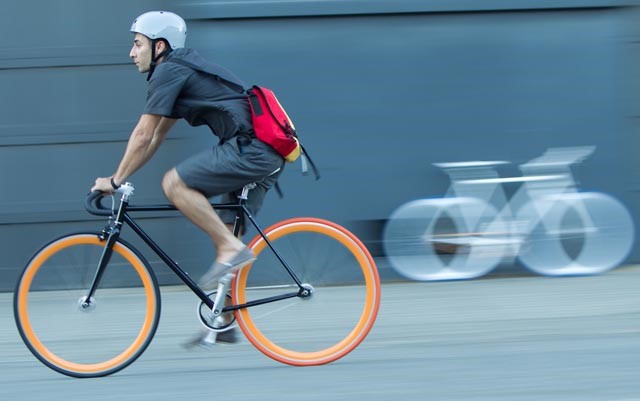
Only .8% of us commute by bike. It is too much hard work early in the morning unless you are a very fitness-conscious person. The troupe is tiny, but growing to be sure, especially in big cities, where distances are modest and a lot of young folks are moving into the workplace. The fashion now is “fixies”, incredible machines of under 20 pounds, that can be hauled upstairs with aplomb and use coaster brakes (mistakenly described as “no brakes”) so they are as trim as many of their riders. Like messengers before them, they connote style and are streetwise fashion leaders. Clunky electric-assist bikes are considered to be a sign that you are not at the height of physical condition and therefore a few notches down on the ladder to perfection, for the cool, Brooklyn crowd. Pride of ownership is a big deal at this time with this crew too. The notion of sharing their prize possession is anathema. There is nothing inherently wrong with bonding with your ride, I suppose, although it is a little kinky.

The current bike culture is the enemy of the future bike culture. It is still very trendy and fashion-conscious. Whether you ride a classic clunker or a $10,000 carbon-fiber masterpiece, defines, to some extent, who you are and how you are. Being a rebel on wheels was a great image for decades, a symbol of those who rejected the central tenet of the consumer society. Now, you are riding a big, heavy shared-bike, with ugly advertising on it, but it doesn’t matter because it is only a 15-minute ride and much easier and more fun than the subway. It doesn’t matter how you look, it matters that you can go nearly door to door in minutes and without mussy hair from wearing a helmet. The barriers to riding are breaking down. Older people are getting over the fact that is has been decades since they rode and doing it.

Even on the smooth and level roads of the city, it still takes effort to move the machine. That discourages a lot of people, accustomed to our no-sweat lifestyle. There are moments when you want to minimize that effort because you are tired, or feeling lazy, or loaded down with gear. Voila, the electric-assisted bike. Transportation for the other 99.2% of people who are not accustomed to making muscle-powered transport their mode. I don’t think that even 1% of the public has ever been on an electric bike. They are being used by a bunch of food delivery people and a handful of older folks. Everybody has seen them in motion but almost nobody has ridden one.

That’s a shame because once that has happened, a million free rides later, the public is going to turn into a loud cheering section, demanding their availability. The only way to accomplish this task expeditiously, aside from the manufacturers unleashing a host of free rides at block parties, etc., is to deploy shared-e-bike schemes. They are already underway in San Francisco and Berlin and many other places and will soon be everywhere. The slack is ready to be taken up. By connecting to existing businesses, the huge expense of automated kiosks can be avoided by giving local establishments first dibs on handling the action in their neck of the woods. Instead of putting existing bike stores out of business, as was reported in Bloomberg News this week, this program can be used to infuse new traffic into neighborhood businesses, who will welcome it and the income it can bring.

It has to be made possible for the machines to be taken home at night by commuters, who are only charged a reasonable fee for the privilege. They need to be made so rugged that they can hold up under constant use, and have their components replaced on a regular schedule along with other kinds of maintenance. They will need to be electric-assist and require pedaling to move, not just throttles so that they are not in conflict with existing bicyclists, some of whom are already displeased at this prospect. There can be an infinitude of designs and we can shake out the best producers and shapes and configurations, through feedback from the users. The evolution of these devices from the crude imitations of standard bikes that we have now, into the fully-functional, safe and comfortable transport of the future, has to come from the bottom up. This pertains to the weight and impact of these transporters as well as the hand-crafted, constantly-changing nature of the devices.

Many of these new vehicles need to be trikes rather than bikes. Even though two wheels have the advantage of less rolling resistance and overall weight, lean steering and easy storage, trikes bring stability and a way to mount the weather protection, inflatable mostly, in place, along with copious storage. Multi-passenger vehicles, like virtually all existing cars, will become the rule rather than the rare exception for cycles. It will be possible for multiple persons to use their muscle-power to contribute to the movement of the vehicle too, both for fun and for energy efficiency, and side by side configurations will make the experience more social and comfortable.

Replacing the giant-esque automobile with something more suitable for dense and congested urban spaces is inevitable, and does not have to take forever. Sparking innovation is not easy, but in this case, everybody is familiar with the concepts; it is just the equipment that is temporarily not yet available. That situation will change dramatically when a few designs are being produced more widely, like the ELF, which proves the viability and popularity of these ideas. Programs like www.SharingUmbrellas.org will help encourage more creative activity. Full legalization will advance. Peace will find away, and so will we. Or I’m a monkey’s uncle.

Times Article Viewed: 8317